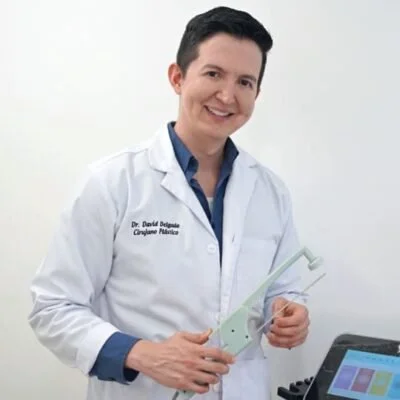
Dr. David Delgado
Plastic Surgeon · Medical Director, Dharma Hair
Member of the Colombian Society of Plastic Surgery (SCCP) · +10 years of experience
Published: enero 19, 2026 · Updated: abril 12, 2026
Every year, tens of thousands of people fly to another country for a medical procedure they could technically get at home. They are not chasing bargains. They are chasing outcomes. And when it comes to restoring hair, Colombia has quietly become one of the most compelling destinations in the world, not because of aggressive marketing, but because patients keep coming back with results that speak louder than any advertisement.
This is not a listicle. This is not a brochure disguised as a blog post. What you are about to read is an honest, editorially driven guide built from clinical experience, patient journeys, real cost breakdowns, and the kind of transparency that most clinics avoid because it forces them to stand behind their work. If you are considering traveling for a restoration procedure, this guide will save you weeks of research, and potentially, a decision you would regret.
We will cover every stage: why Colombia, how the process actually works for international patients, what advanced extraction techniques look like in practice, how to identify a legitimate clinic, what real costs look like in 2026, and what recovery looks like when you are thousands of miles from the operating room. No shortcuts, no hype, just everything you need to make an informed decision.
"International patients often arrive expecting a budget experience. What they find instead is a level of personalization and clinical rigor that had disappeared from their home countries, replaced by assembly-line medicine and six-month waiting lists." — Dr. David Delgado, plastic surgeon, director of Dharma Hair
Why Colombia has become a global destination for restoration
The rise did not happen overnight. Over the past five years, Colombia evolved from an emerging medical tourism market into a legitimate contender against Turkey, Spain, and even the United States. But unlike what happened in Istanbul, where explosive growth led to a fragmented and often unregulated landscape, Colombia's trajectory has been more selective, more clinically driven, and more sustainable.
Three structural factors underpin the trend. First, Colombian medical training is among the most rigorous in Latin America: board-certified plastic surgeons complete 12 to 14 years of university education, residency, and subspecialization before touching a patient independently. Second, the regulatory environment, governed by Invima and departmental health secretariats, requires facility accreditation that is verifiable by any patient willing to spend five minutes online. Third, the cost structure in Colombia allows clinics to invest in technology and staffing at levels that would be economically unviable at American or European price points.
But the real driver is something harder to quantify: patient experience. International patients consistently report that the quality of communication, the depth of pre-operative consultation, and the continuity of post-operative follow-up in Colombia exceed what they found at clinics in their home countries. When your surgeon personally reviews your progress photos at month four instead of handing you off to a nurse practitioner, you notice. When the team responds to your WhatsApp at 9 PM on a Saturday because you are worried about a scab, you remember.
Medical tourism by the numbers
According to ProColombia and the National Health Tourism Association, medical tourism in Colombia grew 22% between 2022 and 2025, with aesthetic procedures representing over 40% of that volume. Hair restoration, specifically, has been one of the fastest-growing segments: international searches for restoration procedures in Colombia tripled between 2023 and 2025.
But statistics tell only part of the story. What actually gets a patient in Miami, Toronto, or London to book a flight is something more concrete: documented before-and-after results from verified patients, clear communication in their language from day one, and a feeling that they are making a medical decision rather than a shopping decision.
Colombia versus other destinations in 2026
Comparing countries fairly requires looking beyond price tags. Not all destinations offer the same safeguards, and not all factors carry equal weight depending on where you are traveling from.
| Factor | Colombia | Turkey | USA | Spain |
|---|---|---|---|---|
| Required medical training | 12-14 years | Variable | 12-16 years | 11-13 years |
| Health regulation | Strict (Invima + Health Dept.) | Variable by region | FDA + state level | Autonomous communities |
| Cost range (USD) | $2,500 - $6,000 | $1,500 - $4,000 | $8,000 - $15,000 | $5,000 - $10,000 |
| Post-op follow-up included | Yes (12+ months) | Limited or none | Varies by clinic | Varies by clinic |
| Communication in English | Bilingual teams | Translator required | Native English | Limited English |
| Flight time from US East Coast | 3-5 hours | 10-14 hours | Domestic | 8-10 hours |
| Same surgeon throughout | Standard practice | Often delegated to techs | Common in private clinics | Varies by clinic |
Turkey remains the lowest-cost option, but the quality gap between top-tier and bottom-tier clinics there is enormous. Many Istanbul clinics operate at industrial scale, performing eight to twelve procedures per day with technicians rather than surgeons doing the actual extraction and implantation. For patients coming from the Americas, Colombia offers a dramatically shorter travel time, direct flights from most major US cities, communication in English or Spanish without intermediaries, and a regulatory framework that makes it easier to verify credentials independently.
The profile of international patients choosing Colombia
- Professionals aged 30-55 who have researched options in at least two or three countries before making a decision.
- Patients who have had negative experiences elsewhere, including consultations that lasted 15 minutes and treatment plans delivered by email without personalized explanation.
- People who value transparency and documented results over flashy marketing or celebrity endorsements.
- Individuals who understand that the cheapest option is rarely the safest, and who are looking for the best relationship between quality, safety, and value.
The step-by-step process for international patients
One of the biggest barriers to traveling for a medical procedure is uncertainty: not knowing what the process looks like from start to finish, not knowing what happens if something goes wrong after you fly home, not knowing whether the photos on Instagram match reality. This section exists to eliminate that uncertainty entirely.
Before you arrive
The process begins weeks before you board a plane. At a serious clinic, the first step is always a remote pre-assessment. You submit detailed photographs of your scalp from multiple angles, along with your medical history, any relevant lab work, and a list of medications you currently take. The medical team reviews this material and provides an initial assessment: whether you are likely a candidate, which technique would be most appropriate for your case, and an estimated investment range.
This stage matters enormously because it filters out patients who would not benefit from the procedure, saving them the time and cost of an unnecessary trip. It also sets expectations accurately. If a clinic skips this step or tells you everything looks great without seeing your scalp, that is a red flag worth paying attention to.
Once candidacy is confirmed through the pre-assessment, the clinic coordinates logistics: recommended hotels near the medical facility, airport pickup if offered, pre-operative lab work that can be completed at home before travel, and a day-by-day itinerary so you know exactly what to expect.
During your stay
After you fly home
This is where most clinics fail international patients, and where the right clinic distinguishes itself. Post-operative follow-up for someone who lives in another country cannot be an afterthought. It needs to be systematic, scheduled, and personal.
At a properly run clinic, you receive a follow-up schedule that spans 12 months or more. You send progress photographs at defined intervals. The same medical team that performed your procedure reviews your images and provides guidance. If something looks abnormal, you get a video call within 24 to 48 hours. If everything looks normal, you get written confirmation and encouragement.
The psychological component of recovery is often underestimated. Between weeks three and eight, most patients experience "shock loss," a temporary shedding of the transplanted hair that is completely normal but deeply alarming if you do not know it is coming. A good clinic prepares you for this before it happens. A great clinic follows up proactively during this window to reassure you with clinical evidence that everything is on track.
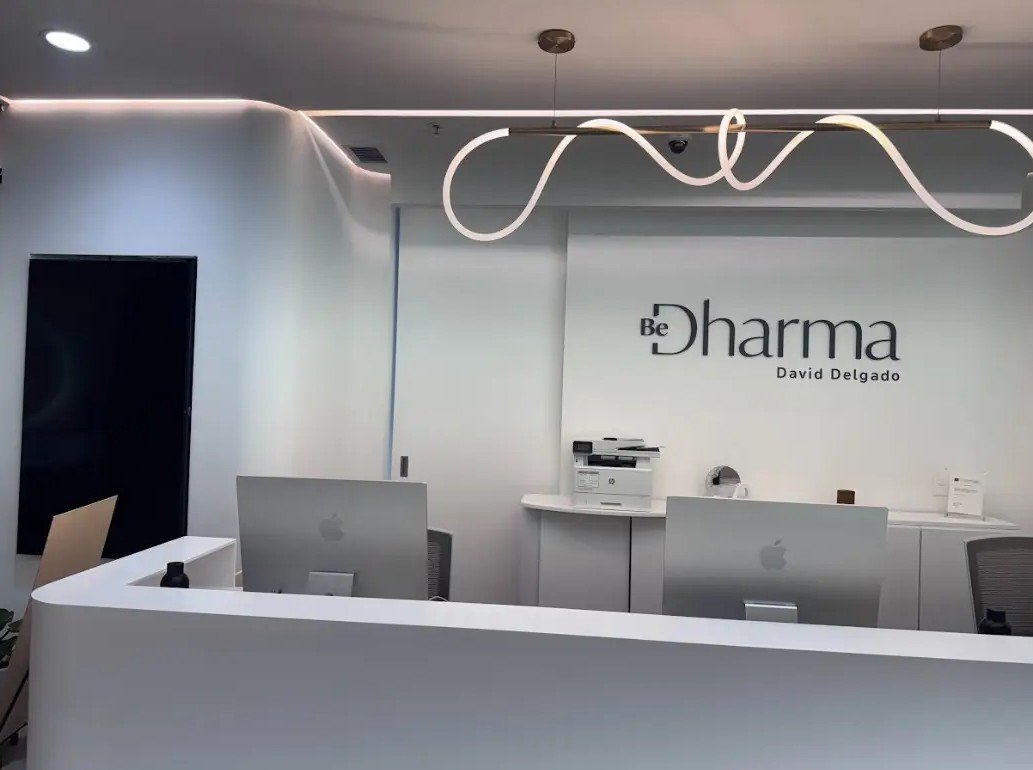
Dharma Hair facilities at Torre Medica Oviedo, Medellin. Accredited by the Antioquia Health Department.
Our technique: advanced follicular unit extraction in Medellin
Technique matters. It is not a marketing differentiator; it is the single most important factor in determining whether your results will look natural, whether your donor area will be preserved for future sessions, and whether you will heal quickly and comfortably. Understanding what happens during the procedure helps you ask better questions and identify clinics that are cutting corners.
What the procedure actually involves
Follicular Unit Extraction, commonly abbreviated as FUE, is a method of harvesting individual follicular units from the donor area, typically the back and sides of the head, using a micro-punch instrument with a diameter between 0.7 mm and 1.0 mm. Each follicular unit contains one to four hairs. The extracted units are then implanted individually into the recipient area following a design that accounts for natural growth direction, angle, and density distribution.
What makes the technique "advanced" is not a proprietary name or a branded tool. It is the combination of surgeon skill, magnification technology, graft preservation protocols, and implantation precision. At Dharma Hair, the surgeon uses high-magnification loupes throughout the procedure, grafts are kept in a hypothermic holding solution to maximize viability, and implantation follows a custom density map designed during the pre-operative consultation.
"The difference between a mediocre result and an excellent one is not the number of grafts. It is the angle of implantation, the density mapping, and the artistic judgment that determines where each follicular unit goes. That cannot be delegated to a technician." — Dr. David Delgado, plastic surgeon, director of Dharma Hair
How it is performed at Dharma Hair
The procedure follows a precise sequence that has been refined through hundreds of cases. Understanding this sequence helps demystify the experience and sets realistic expectations.
Procedure phases
- Hairline design and marking: The surgeon draws the new hairline directly on the patient's scalp, discussing every detail, the shape of the frontal zone, the temples, the density gradient, and the long-term sustainability of the design. The patient approves the design before any extraction begins.
- Local anesthesia: Administered in the donor and recipient areas. Most patients describe the sensation as mild pressure lasting about two minutes. After that, the entire procedure is painless.
- Extraction phase: Individual follicular units are harvested from the donor zone using micro-punches. The surgeon selects grafts strategically to maintain uniform donor density, preventing the "moth-eaten" look that aggressive extraction can cause.
- Graft preparation and preservation: Extracted units are sorted under magnification, cleaned of excess tissue, and stored in a chilled biocompatible solution that preserves their viability until implantation.
- Recipient site creation: Using precision blades, the surgeon creates micro-incisions in the recipient area at specific angles and depths that match the natural growth pattern of surrounding hair.
- Implantation: Each graft is placed individually into its designated site. Single-hair grafts go along the hairline for a natural, feathered appearance. Multi-hair grafts fill in behind for density. The entire process is meticulous and cannot be rushed without compromising results.
The total session length typically ranges from six to ten hours depending on the graft count. Sessions of 2,000 to 3,000 grafts are common for moderate cases. Larger sessions up to 4,500 grafts are possible for extensive restoration but require a donor area with sufficient density to sustain that harvest without visible thinning.
One critical distinction worth understanding: at some high-volume clinics, technicians perform extraction and implantation while the surgeon oversees multiple procedures simultaneously. At Dharma Hair, the surgeon leads the procedure from start to finish. This is not marketing language. It is a clinical standard that directly affects outcome quality, and it is one of the first questions you should ask any clinic you are evaluating.
What defines the best clinic: a checklist that actually works
The internet is full of "top 10 clinic" lists that are paid placements. Rankings can be bought. Reviews can be fabricated. So how does an informed patient actually distinguish between a clinic that will deliver excellent results and one that will deliver regret? By asking the right questions and verifying the answers independently.
Non-negotiable criteria
Your evaluation checklist
- Board certification of the lead surgeon. In Colombia, this means membership in the Colombian Society of Plastic Surgery (SCCP), which is verifiable online. A doctor with "aesthetic medicine" training is not the same as a board-certified plastic surgeon with fellowship training in restoration.
- Facility accreditation. The clinic must be registered with the local Health Department (Secretaria de Salud). This registration number should be available on request. If they hesitate, walk away.
- Who performs the procedure. Ask directly: will the surgeon extract and implant, or will technicians handle those steps? There is no wrong answer per se, but you deserve to know what you are paying for.
- Before-and-after gallery with consistent documentation. Look for standardized lighting, angles, and timeframes. Be skeptical of galleries that only show best-case results at month fourteen. A credible clinic shows the full spectrum, including cases that were complex.
- Follow-up protocol for international patients. Ask what happens after you leave. How are follow-up appointments conducted? Who reviews your progress photos? What is the response time if you have a concern at 2 AM in your time zone?
- Transparent pricing. The quote should include everything: consultation, procedure, anesthesia, post-operative kit, and follow-up. If "extras" start appearing after you arrive, the clinic's integrity is questionable.
Red flags to watch for
Not every warning sign is obvious. Some of the most common red flags are disguised as selling points. Guaranteed graft counts before an in-person evaluation is one, because no responsible surgeon commits to a specific number without examining the donor area directly. "All-inclusive packages" that bundle hotel, tours, and procedure into one price often mean the medical component is being subsidized at the expense of quality. Pressure to book immediately or lose a "promotional price" is another. A legitimate clinic does not need urgency tactics. Their results speak for themselves.
One more: if a clinic's entire marketing strategy is built on influencer partnerships and celebrity endorsements rather than clinical documentation and verifiable credentials, ask yourself what exactly you are paying for. You are not buying a brand experience. You are making a medical decision that will be visible on your head for the rest of your life.
How much does it actually cost: pricing, factors, and transparency
Cost is usually the first question and the hardest to answer honestly. The reason is simple: a credible cost estimate depends on variables that can only be assessed after a proper clinical evaluation. Any clinic that quotes you a fixed price from a photograph alone is either oversimplifying or misleading you.
Factors that determine price
What patients actually pay in Colombia in 2026
In Colombia, the investment for a quality restoration procedure typically falls between USD $2,500 and $6,000. This range assumes a qualified surgeon, an accredited facility, and comprehensive follow-up. Procedures at the lower end of the range usually involve fewer grafts or less complex cases. The upper end corresponds to high-graft-count sessions with extensive coverage needs.
For comparison, the same procedure performed by a similarly credentialed surgeon in the United States would range from $8,000 to $15,000. In Western Europe, $5,000 to $10,000. In Turkey, prices can go as low as $1,500, but the clinical safeguards and surgeon involvement at that price point should be scrutinized carefully.
The cost savings in Colombia are real, but they should not be the sole reason you choose a clinic. A procedure that costs $2,000 and delivers a mediocre result is infinitely more expensive than one that costs $5,000 and transforms your appearance. Think in terms of cost per year of satisfaction, not total invoice. A result that lasts decades and looks natural every single day is an investment, not an expense.
"I always tell patients: do not choose a clinic based on who has the lowest price. Choose based on who gives you the most honest answer about what is realistic for your case. Honesty costs nothing but saves everything." — Dr. David Delgado, plastic surgeon, director of Dharma Hair
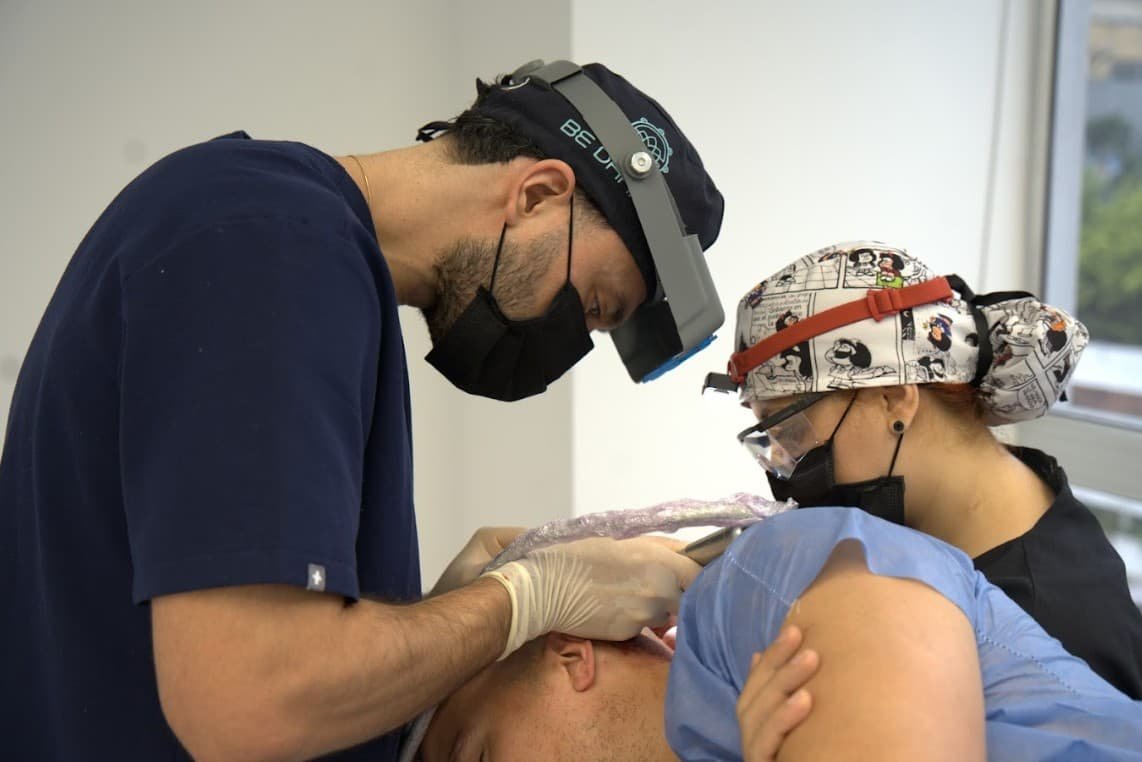
FUE procedure performed by Dr. David Delgado at Dharma Hair, Medellin.
Dharma Hair: a reference clinic in Medellin
We have spent this entire guide giving you the tools to evaluate any clinic objectively. Now let us apply that same framework to ourselves. If we are going to tell you what a great clinic looks like, we need to show you that we meet every criterion we just described, and let you verify it independently.
Why patients choose Dharma Hair
- Board-certified plastic surgeon leading every procedure. Dr. David Delgado is a member of the Colombian Society of Plastic Surgery, fellowship-trained in hair restoration, and personally involved from the first consultation through the twelve-month follow-up. His credentials are verifiable on the SCCP website.
- Accredited facility in a medical tower. Dharma Hair operates from Torre Medica Oviedo in El Poblado, Medellin, a medical complex with full hospital-grade infrastructure. The facility is registered with the Antioquia Health Department, and the registration number is available upon request.
- Bilingual team. The entire clinical and administrative team communicates in both Spanish and English. International patients do not need translators, interpreters, or third-party coordinators. You speak directly with the people who will take care of you.
- All-inclusive pricing with no hidden fees. The quoted price includes the pre-operative assessment, the procedure itself, anesthesia, post-operative kit, and twelve months of scheduled follow-up. There are no surprise charges after you arrive.
- Twelve-month follow-up program for international patients. Scheduled video consultations with the same medical team. Progress photo review by the surgeon. Proactive check-ins during critical phases of recovery. You are not abandoned after you leave the clinic.
- Honest candidacy assessment. Not everyone is a candidate. Dharma Hair turns away patients whose donor area is insufficient, whose expectations are unrealistic, or whose medical history contraindicates the procedure. Integrity over revenue, always.
We are not the cheapest option. We are not the flashiest. We are a clinic where the same surgeon who designed your hairline is the one who places every graft, and the one who reviews your six-month photos. For patients who understand the difference, that matters more than anything else.
What to expect from the procedure in 2026
Expectations shape satisfaction. Patients who understand what the recovery process actually looks like, including the uncomfortable parts, consistently report higher satisfaction with their results than patients who were told "it is easy" and then encountered reality. This section is a month-by-month timeline that reflects what real patients experience, not best-case marketing scenarios.
Day of the procedure
You arrive at the clinic in the morning having followed pre-operative instructions: no alcohol for 48 hours, no blood-thinning supplements for a week, a light breakfast. The surgical area is prepared, and local anesthesia is administered. Most patients describe the initial injections as the only mildly uncomfortable moment of the entire day. Once the anesthesia takes effect, the rest is painless.
You are awake throughout. Many patients watch movies on a tablet, listen to podcasts, or simply rest. There are scheduled breaks for meals and stretching. By the end of the session, you walk out of the clinic on your own, typically with a light bandage on the donor area and the grafted area left exposed to air. You will look like you had a medical procedure, because you did, but there is no dramatic swelling or bleeding. Most patients are surprised by how undramatic the immediate aftermath is.
Recovery from abroad: what it really looks like
For international patients, the critical window is the first ten days. During this period, the transplanted grafts are securing themselves in the recipient sites. You need to avoid direct sun exposure, strenuous exercise, and any activity that could dislodge the grafts. Sleeping at a 45-degree angle for the first five nights is recommended to minimize swelling.
Most patients fly home between day five and day seven after their procedure. By that point, the grafts are anchored, the donor area is healing, and you have had your first or second post-operative check. Flying is safe. The cabin pressure does not affect the grafts. The main precaution is protecting the grafted area from contact during the flight, which means being mindful of headrests and seatbelts.
Once home, you follow the written care instructions provided at discharge. You continue the prescribed washing routine. You avoid hats, helmets, and anything that presses against the grafted area for at least three weeks. You send progress photos to the clinic at the scheduled intervals.
Healing timeline: month by month
Understanding this timeline is crucial because unrealistic expectations are the primary source of dissatisfaction in restoration procedures. A clinic that promises "full results in three months" is either uninformed or dishonest. Biology has its own schedule, and no amount of marketing can accelerate it.
Schedule your consultation
Torre Medica Oviedo, Cll 6 Sur #43A-227, Suite 701, Medellin
Monday to Friday 8:00 AM - 5:00 PM | Saturday 8:00 AM - 12:30 PM
Message us on WhatsAppIn-person evaluation in Medellin. Remote pre-assessment available for international patients.
Frequently asked questions
Continue reading about hair implant in Colombia
Scientific References
1. Harris JA. (2013). Follicular unit extraction. Facial Plast Surg Clin North Am. PMID: 24017979
2. Goldin J. Hair Transplantation. StatPearls [Internet]. PMID: 31613520
3. Avram MR. (2020). Robotic Hair Transplantation. Facial Plast Surg Clin North Am. PMID: 32312506
Dharma Hair — Specialized Hair Restoration
Torre Médica Oviedo, Cll 6 Sur #43A-227, Office 701, Medellín, Colombia
Phone/WhatsApp: +57 321 226 5964 · Email: clinicabedharma@gmail.com
Medical Director: Dr. David Delgado — Plastic Surgeon, SCCP Member