Dr. David Delgado
Plastic Surgeon · Medical Director, Dharma Hair
Member of the Colombian Society of Plastic Surgery (SCCP) · +10 years of experience
Published: abril 13, 2026 · Updated: abril 14, 2026
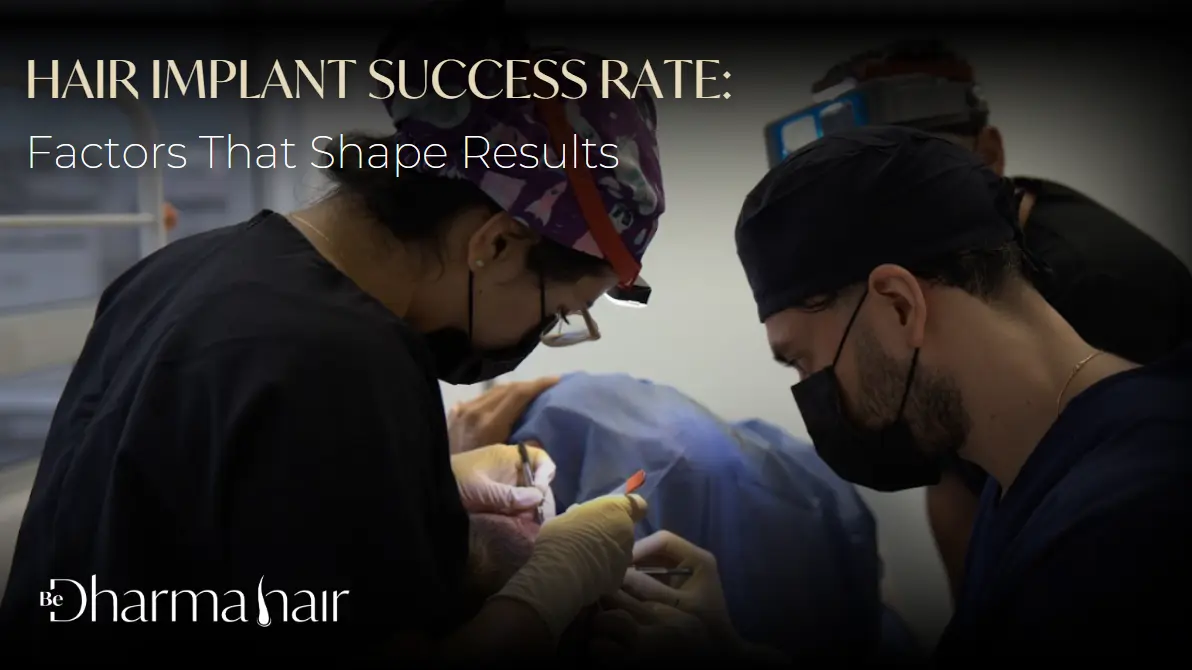
A successful hair restoration is not just about placing grafts. It is about protecting every follicle, planning each angle with precision, and creating results that look natural for years to come. That is why hair implant success rate is one of the first things patients want to understand before moving forward. In medical terms, success is measured by how many transplanted follicles survive, heal properly, and grow as expected after the procedure. For anyone considering treatment, this number matters because it reflects the quality of the technique, the accuracy of the process, and the experience behind every decision.
At Dharma Hair, we know that a strong outcome begins long before implantation day. The success rate of a hair implant is influenced by key factors such as the condition of the donor area, the way follicles are extracted and handled, and the method used, whether FUE or ARTAS robotic technology. In other words, excellent results do not happen by chance. They come from combining advanced technique, medical expertise, and a personalized treatment plan designed to give each patient the highest possible graft survival and the most natural-looking result.
What is the average hair implant success rate?
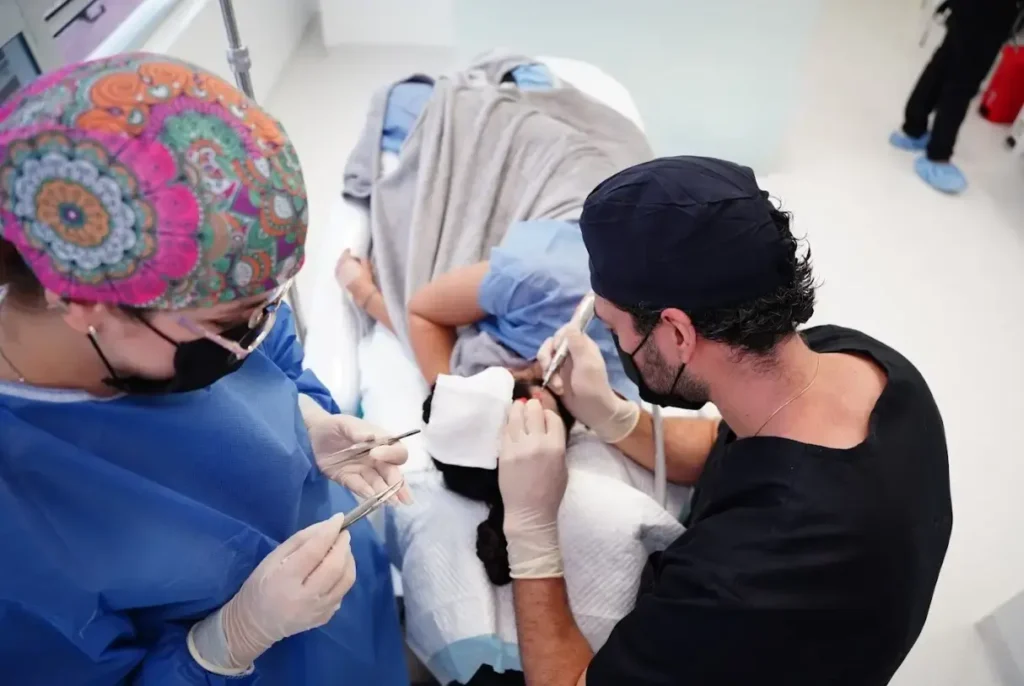
When patients ask about the average hair implant success rate, they are usually asking one essential question: How many of the transplanted follicles will survive and grow? In medical terms, a strong result is closely tied to graft survival, because every healthy follicle that is preserved, implanted correctly, and nourished during healing has a better chance of producing long-term, natural-looking growth. At Dharma Hair, this is exactly precision matters most.
Success is measured by follicle survival
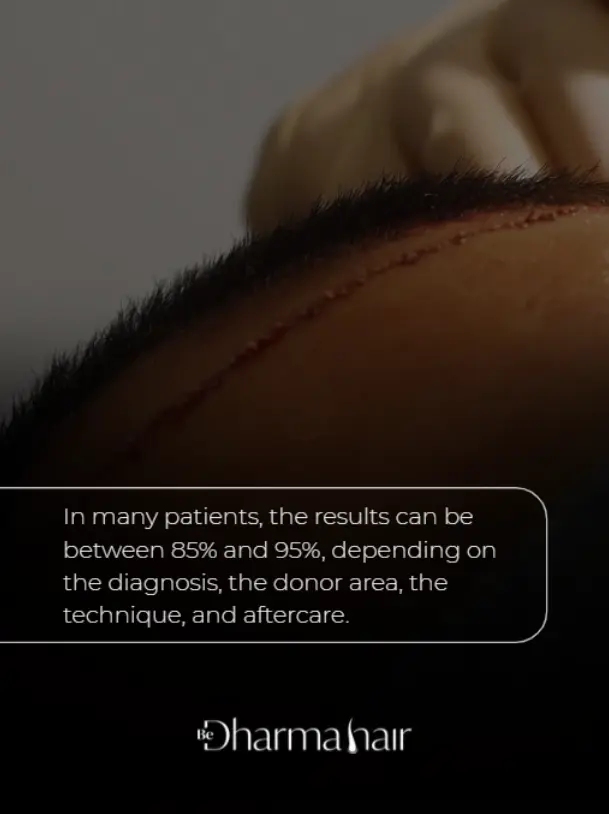
A successful procedure is not defined only by how the hair looks on the day of surgery. It is defined by how many follicles remain viable throughout extraction, handling, implantation, and recovery. In high-quality procedures, between 85% and 90% of follicles remain in perfect condition, which is a strong indicator of excellent preservation and a solid foundation for healthy regrowth. This is why the true hair implant success rate depends on much more than the procedure itself. It depends on how every graft is treated from beginning to end.
What patients can realistically expect
For most patients, a good outcome means seeing new growth develop gradually and naturally over the months following treatment. However, no clinic should present success as a one-size-fits-all number. The result is also influenced by the patient’s donor hair quality, scalp condition, healing response, and the degree of hair loss being treated. In other words, even when the procedure is performed correctly, each patient’s biology still plays an important role in the final appearance.
Why aftercare also matters
Even the best-executed transplant needs the right recovery process. The final success rate of a hair implant can be affected by how closely the patient follows post-operative instructions, including scalp care, sleeping position, washing guidelines, and follow-up recommendations. Proper aftercare helps protect newly implanted grafts during the most delicate phase of healing and supports stronger, more predictable growth.
The number matters, but so does who perform the procedure
A high success rate is not only about statistics. It is about medical judgment, surgical technique, and attention to detail. At Dharma Hair, we combine advanced methods with personalized planning to give each patient the best possible conditions for graft survival. That is what turns a percentage into real, visible results.
Key takeaway: a strong hair implant success rate is closely linked to follicle survival, and while 85% to 90% of follicles remaining in perfect condition is an encouraging benchmark, the result also depends on the patient’s profile and the quality of post-procedure care.

What factors affect Hair implant success rate?
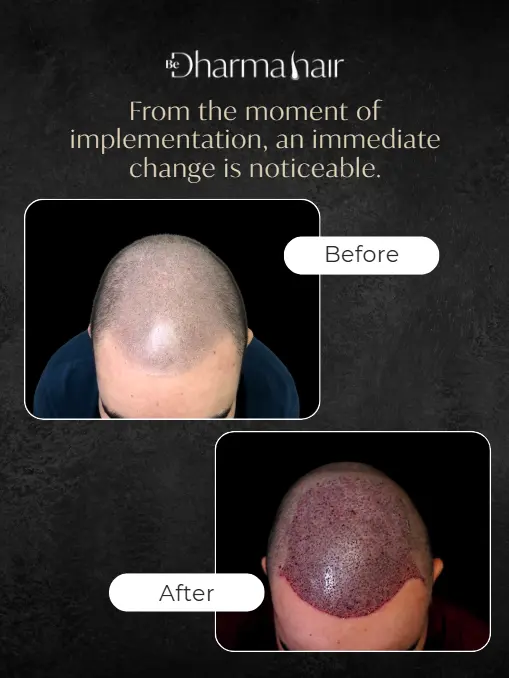
A strong hair implant success rate is never the result of a single step done well. It is the outcome of a complete medical process in which every detail matters, from patient evaluation to graft placement and recovery. At Dharma Hair, we explain this clearly to our patients: successful hair restoration depends on how well the follicles are selected, protected, implanted, and supported after the procedure.
A hair transplant can only be as successful as the weakest part of the process.
Even with an advanced technique, poor handling, weak donor supply, or inadequate aftercare can affect the result.
The specialist’s experience shapes the entire procedure
The experience of the medical team plays a direct role in the outcome. A skilled specialist knows how to evaluate the pattern of hair loss, estimate graft needs, preserve the donor area, and design a restoration that looks balanced and natural. Just as important, experience helps guide decisions that patients do not always see, such as choosing the right extraction pattern, controlling graft handling time, and determining how to place follicles for the most realistic density and direction.
At Dharma Hair, this level of planning is essential because technical execution and medical judgment go hand in hand.
Extraction and implantation quality are critical
Even healthy follicles can be compromised if they are not extracted and implanted properly. This is one of the most important factors behind the success rate of hair implant. Each graft must be removed carefully, preserved in optimal conditions, and placed with precision to reduce unnecessary trauma and improve survival.
This is why quality is not only about removing follicles from the donor area. It is also about how those grafts are handled between extraction and implantation, how long they remain outside the body, and how accurately they are inserted into the recipient area.
The donor area must be healthy and well evaluated
The donor area is the foundation of the entire procedure. If the follicles in this region are strong, stable, and properly selected, the chances of achieving consistent growth are significantly better. On the other hand, if the donor supply is limited or the hair characteristics are less favorable, the treatment plan must be adjusted carefully.
That is why the best results start with a thorough assessment, not a generic recommendation. At Dharma Hair, we evaluate hair caliber, density, scalp condition, and the long-term stability of the donor zone before defining the approach.
Post-Operative care protects the investment
A successful procedure does not end when the implantation is complete. The first days and weeks after surgery are essential, because newly implanted grafts need the right environment to heal and anchor properly. Following instructions on washing, sleeping position, scalp care, and activity restrictions can make a real difference during this stage.
Patients sometimes focus only on the day of the procedure, but post-operative care is part of the result. Good technique creates the opportunity for success; proper aftercare helps protect it.
Technology can improve precision and consistency
The technology used during the procedure can also influence outcomes. Advanced systems can help improve accuracy, consistency, and graft preservation, especially during extraction. This is one of the reasons why modern hair restoration continues to evolve beyond manual technique alone.
At Dharma Hair, we believe technology should support medical expertise, not replace it. When used correctly, tools such as FUE systems and ARTAS robotic technology can contribute to a more controlled process and help protect follicular quality throughout treatment.
Why all these factors must work together
The most important thing for patients to understand is that hair implant success rate is not determined by one factor in isolation. It depends on a combination of specialist experience, graft handling quality, donor area condition, post-operative care, and the technology used during the procedure. When these elements are aligned, the result is not only better graft survival, but also a more natural and reliable outcome.
At Dharma Hair, that is exactly how we approach every case: with precision, medical expertise, and a personalized strategy designed to give each follicle the best possible chance to thrive.
You might be interested in Before and after hair implant results: what real patients show
Does hair implant success rate change with FUE or ARTAS?
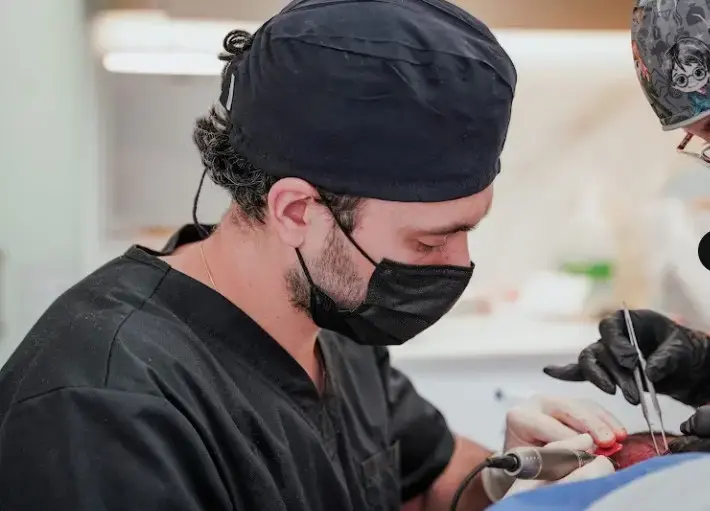
The short answer is yes, hair implant success rate can vary depending on the technique used, but not because one method is universally “better” for every patient. In clinical practice, success depends on how well the chosen method matches the patient’s hair characteristics, donor area, goals, and medical profile. At Dharma Hair, we always emphasize the same principle: the best outcomes come from combining the right technique with the right medical team.
FUE: Precise, effective, and proven in expert hands
FUE (Follicular Unit Extraction) remains one of the most trusted techniques in modern hair restoration because it allows follicles to be extracted individually with a high level of precision. When performed by skilled professionals, FUE can deliver excellent graft survival, natural-looking density, and a carefully designed hairline that fits the patient’s facial features and long-term hair loss pattern.
What makes the difference is not only the technique itself, but the way it is executed. A well-performed FUE hair transplant requires refined extraction, careful graft handling, and accurate implantation. In other words, FUE is highly effective, but its success is directly tied to the experience and judgment of the team performing it.
ARTAS: Robotic precision in follicle harvesting
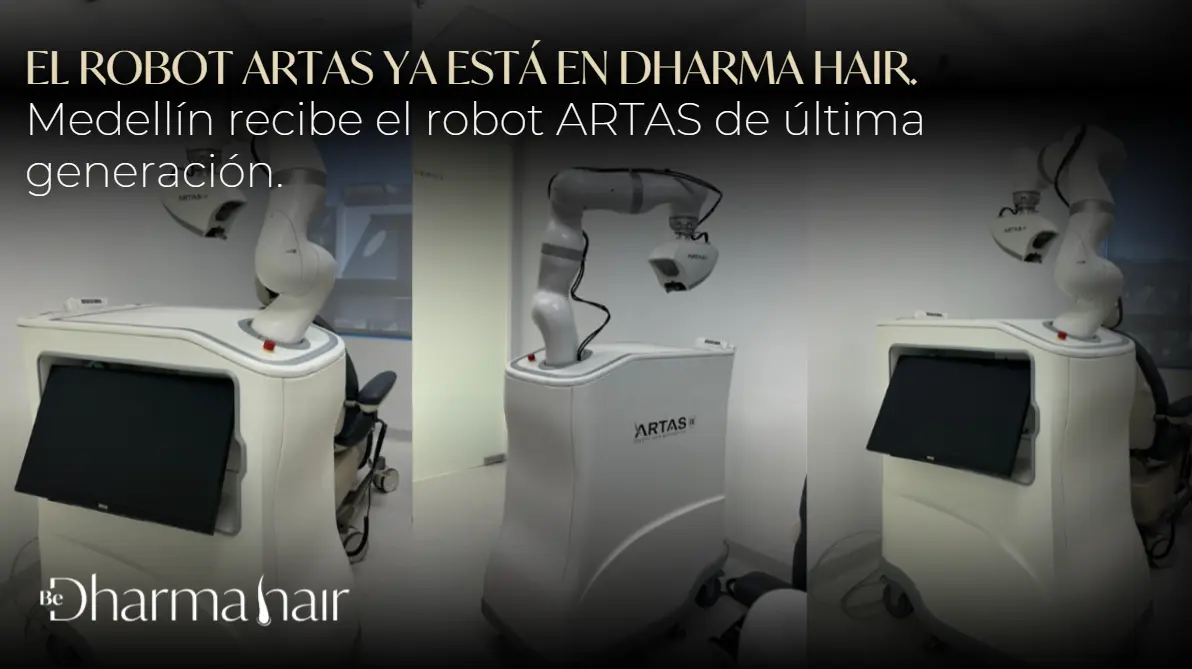
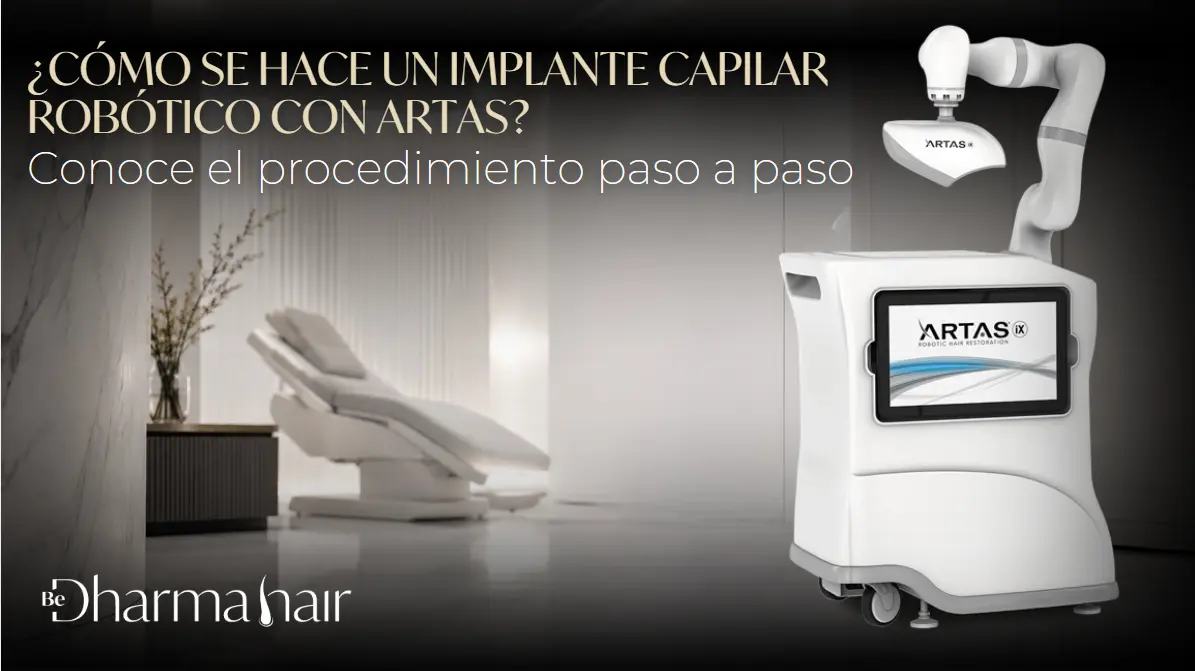
ARTAS robotic technology adds another level of consistency to the harvesting phase by using advanced imaging and robotic-assisted extraction to identify and remove follicular units with precision. This can help optimize follicle selection and reduce variability during one of the most delicate stages of the procedure.
One of the important advantages we consider at Dharma Hair is that the robot can reduce follicle damage by 20%, which supports better graft preservation during extraction. In a procedure where every follicle matters, minimizing trauma can have a meaningful impact on the overall success rate of a hair implant.
Have questions about your case?
Talk to our medical team. A personalized evaluation is the only way to know if a hair implant is right for you.
Message us on WhatsAppBetter-preserved follicles create better conditions for survival, healing, and long-term growth.
That is why the harvesting stage is so critical to the result.
FUE vs. ARTAS: What Changes for the Patient?
From the patient’s perspective, both approaches aim for the same goal: healthy grafts, natural growth, and a result that looks seamless. The difference is in how follicles are harvested and how much support technology provides during that process.
FUE offers flexibility and excellent control when performed by an experienced team. ARTAS can enhance precision and consistency in follicle harvesting, especially in cases where robotic assistance may help protect graft quality. Neither option should be presented as a one-size-fits-all solution, because each patient brings a different donor capacity, hair type, and treatment objective to the table.
The right technique depends on the right case
This is where true medical expertise matters. Choosing between FUE and ARTAS should never be based only on trends or technology alone. It should be based on a detailed evaluation of the scalp, donor area, degree of hair loss, and the type of result the patient wants to achieve.
At Dharma Hair, we do not believe in generic recommendations. We believe in selecting the approach that offers the best conditions for follicle survival, natural-looking design, and long-term satisfaction. For some patients, that may be traditional FUE performed with expert precision. For others, ARTAS robotic hair restoration may offer important advantages during extraction.
What does hair implant success rate?
So, does hair implant success rate change with FUE or ARTAS? It can, especially when technology helps improve graft preservation. However, the real answer is more nuanced: success does not depend on the name of the technique alone. It depends on how the procedure is planned, how the follicles are handled, and whether the selected method is truly the best fit for the patient.
That is the value Dharma Hair brings to every case: advanced techniques, medical expertise, and a personalized decision-making process focused on achieving reliable, high-quality results.
What Research Shows
External research also supports the value of precise follicular handling in hair restoration. In a clinical study of 158 men treated with FUE hair transplantation, researchers reported that “over 90% of the hair follicles survived”, highlighting the strong role that technique and graft preservation play in long-term outcomes. For patients, this reinforces an important idea: achieving a strong hair implant success rate depends not only on the procedure itself, but on how carefully each follicle is extracted, protected, and implanted.
You might be interested in Why international patients choose FUE Hair transplant in Colombia
Why International Patients Choose Medellín, Colombia for Hair Restoration
For international patients, having a hair restoration procedure is not only about the technique. It is also about feeling confident in the destination, the medical team, and the overall experience. At Dharma Hair, we welcome patients who travel to Medellín, Colombia looking for personalized care, advanced hair restoration techniques, and a treatment plan designed around their needs. From the initial evaluation to post-procedure guidance, our team works to make the process clear, comfortable, and trustworthy for patients coming from abroad.
Choosing hair restoration in Medellín, Colombia also gives international patients the opportunity to receive treatment in a city that feels accessible, modern, and welcoming during recovery. At Dharma Hair, we understand that traveling for a procedure involves many decisions, which is why we focus on providing close support, precise medical care, and natural-looking results that make the journey worthwhile. If you are considering treatment from outside Colombia, we invite you to book a consultation with Dharma Hair and discover the right approach for your case.
Why Dharma Hair is a trusted choice for Hair Restoration
Choosing where to have a hair restoration procedure is a deeply personal decision, and at Dharma Hair, we believe that trust begins with listening. Every patient receives personalized care and an individual evaluation, because no two patterns of hair loss, donor areas, or aesthetic goals are the same. Our team takes the time to understand each case in detail, recommend the most suitable approach, and build a treatment plan designed around both medical criteria and the patient’s expectations. This human, tailored approach allows us to deliver not only a strong hair implant success rate, but also an experience in which patients feel informed, supported, and confident from the first consultation onward.
What truly sets Dharma Hair apart is the way we combine advanced FUE techniques and robotic technology with medical precision and a clear commitment to natural-looking results. We focus on protecting every follicle throughout the process, because precision, safety, and high follicular survival are essential to achieving results that look seamless and last overtime. For us, successful hair restoration is not simply about adding hair. It is about restoring confidence with careful planning, refined execution, and results that feel authentic to each patient.
Frequently Asked Questions
1. What is a good hair implant success rate?
A good hair implant success rate is generally linked to how many transplanted follicles survive, heal well, and produce healthy new growth. In quality procedures, strong results are associated with high graft survival and careful follicle handling throughout the process. More than a single percentage, what truly matters is whether the follicles remain viable and are implanted under the right conditions to support long-term growth.
2. Is the success rate of a hair implant the same for every patient?
No. The success rate of a hair implant can vary from one patient to another. Factors such as the condition of the donor area, hair characteristics, scalp health, degree of hair loss, healing response, and post-operative care all influence the result. This is why a personalized medical evaluation is essential before choosing a treatment plan.
3. How long does it take to see the results after a hair implant?
Hair restoration results appear gradually. In the first few weeks, it is normal for transplanted hairs to shed as part of the natural cycle. New growth usually starts to become visible after a few months, and the outcome continues to improve over time. Patience is important, because natural-looking results develop progressively rather than overnight.
4. Does FUE offer a high hair implant success rate?
Yes, FUE is considered a precise and effective technique when it is performed by skilled professionals. Its success depends on careful extraction, proper graft preservation, and accurate implantation. When each step is handled correctly, FUE hair transplant procedures can achieve excellent follicle survival and very natural-looking density.
5. Does ARTAS improve hair implant success rate?
ARTAS robotic technology can support the procedure by improving consistency and precision during follicle harvesting. One important advantage is that the robot can reduce follicle damage by 20%, which helps protect graft quality during extraction. Better-preserved follicles create better conditions for survival, which can positively influence the overall hair implant success rate.
6. Is ARTAS better than FUE?
Not necessarily in every case. FUE and ARTAS are both valuable options, but the best choice depends on the patient’s hair type, donor area, treatment goals, and medical profile. Some patients may benefit more from the flexibility of manual FUE, while others may be strong candidates for robotic hair restoration. The right technique is the one that best fits the individual case.
7. Why is the donor area so important in hair restoration?
The donor area provides the follicles that will be transplanted, so its quality plays a major role in the outcome. Strong, stable donor follicles give the procedure a better foundation and increase the chances of healthy regrowth. A weak or limited donor area does not always rule out treatment, but it does require careful planning and realistic expectations.
8. Can aftercare affect the success rate of hair implant?
Yes, it can. Even a well-performed procedure needs proper healing conditions to protect newly implanted grafts. Following instructions related to washing, sleeping position, physical activity, and scalp care helps reduce unnecessary trauma during recovery. In other words, good surgery and good aftercare work together to support the best possible result.
9. What should I look for when choosing a hair restoration clinic?
You should look for a clinic that combines medical expertise, personalized evaluation, advanced techniques, and a clear focus on follicle survival and natural-looking results. It is important to choose a team that evaluates your case individually instead of offering a generic solution. A trustworthy clinic should explain the procedure clearly, recommend the most appropriate technique, and prioritize safety, precision, and long-term outcomes.
10. Why do patients choose Dharma Hair for hair restoration?
Patients choose Dharma Hair because we combine personalized care, advanced options such as FUE and ARTAS robotic technology, and a strong commitment to precision, safety, and high follicular survival. We understand that hair restoration is not only a medical procedure, but also a decision tied to confidence and self-image. That is why we approach every case with close attention, individualized planning, and a clear goal: to deliver results that look natural, feel authentic, and give each patient greater confidence moving forward.
Continue reading about hair implant in Colombia
Dharma Hair — Specialized Hair Restoration
Torre Médica Oviedo, Cll 6 Sur #43A-227, Office 701, Medellín, Colombia
Phone/WhatsApp: +57 321 226 5964 · Email: clinicabedharma@gmail.com
Medical Director: Dr. David Delgado — Plastic Surgeon, SCCP Member