
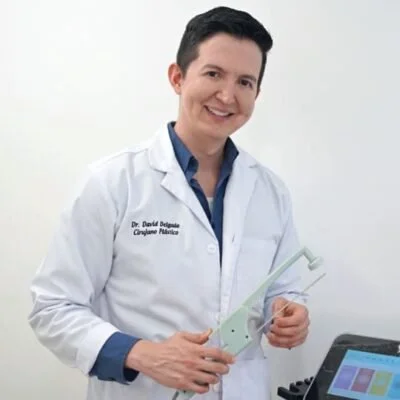
Dr. David Delgado
Plastic Surgeon · Medical Director, Dharma Hair
Member of the Colombian Society of Plastic Surgery (SCCP) · +10 years of experience
Published: marzo 13, 2026 · Updated: agosto 27, 2026
There is a question that surgeons in Colombia hear more than almost any other, and it does not come from local patients. It comes from people in Miami, Toronto, London, Madrid, and Sao Paulo, people who have spent months researching, comparing clinics across continents, reading reviews in three languages, and talking to patients who have already done it. The question is simple: why here? Why not Turkey, where it is cheaper? Why not the United States, where it feels safer? Why Colombia, and why now?
The answer is not a single factor. It is an accumulation of realities that converge in a way that no other destination currently matches. It is the combination of board-certified surgeons with 12 to 14 years of training, a regulatory framework that is verifiable and strict, technology that matches or exceeds what most first-world clinics offer, pricing that reflects local economics rather than inflated overheads, and an approach to patient care that has not yet been industrialized into an assembly line. But you will not understand any of that from a brochure. You need the full picture.
What follows is not promotional content. It is a detailed, editorially honest exploration of why international patients are increasingly choosing Colombia for restoration procedures, how the process works when you are traveling from abroad, what it actually costs and why, how Colombia compares to other popular destinations, and why one clinic in Medellin has built a reputation specifically among patients who have already done their homework. This is the guide those patients wish they had found at the beginning of their research, not at the end.
Why more international patients are choosing this option
The global restoration market has changed dramatically in the past five years. What was once a niche procedure pursued quietly by public figures and executives has become mainstream, driven by social media normalization, better outcomes, and a growing awareness that early intervention prevents more drastic measures later. But alongside that mainstreaming, a parallel shift occurred: patients became more educated, more critical, and more willing to cross borders to find the right combination of expertise, technology, and value.
International patients are not bargain hunters. The data from ProColombia and the National Health Tourism Association in Colombia consistently shows that the average medical tourist arriving for an aesthetic procedure has researched more than five clinics in at least two countries before making a decision. They compare surgeon credentials, facility accreditation, before-and-after portfolios, communication responsiveness, and post-operative follow-up protocols. They are, in a word, sophisticated buyers. And sophisticated buyers keep arriving in Colombia because the product, meaning the clinical outcome and the patient experience, holds up under scrutiny.
Understanding the technique that changed the field
The technique that most international patients are seeking uses individual follicular unit extraction. Rather than removing a strip of tissue from the back of the scalp, which was the standard for decades, this approach extracts individual follicular units one by one using a precision micro-punch instrument with a diameter between 0.7 mm and 1.0 mm. Each unit contains between one and four hairs. The extracted grafts are preserved in a temperature-controlled solution and then implanted into the recipient area at precise angles and depths that mirror the natural growth pattern.
This technique eliminates the linear scar associated with older methods, dramatically reduces recovery time, produces a more natural result, and allows patients to wear their hair short without visible evidence of surgery. It is why the procedure has moved from the category of last resort to first choice for patients at Norwood stages II through V who still have adequate donor density.
But the technique alone does not explain why patients travel internationally. The technique is available in every major city in the world. What draws patients to Colombia is the quality of execution: the surgeon's experience, the surgical team's precision, the post-operative care protocol, and the overall clinical environment. These variables differ dramatically between clinics, between cities, and between countries. This is where Colombia's structural advantages become relevant.
Why the procedure is especially attractive for international patients
Several factors make this procedure uniquely suited to medical tourism. First, it is an outpatient procedure performed under local anesthesia, meaning there is no general sedation, no hospital stay, and no post-operative immobility. Patients walk out of the clinic the same day. Second, the critical recovery window is short: five to seven days of restricted activity, after which most patients can fly home comfortably. Third, the results are permanent but gradual, meaning the months of hair growth happen at home, not in the destination country. The patient only needs to be in Colombia for the procedure itself and the immediate post-operative period.
This combination means a patient from the United States or Canada can fly into Medellin on a Monday, have their evaluation on Tuesday, undergo the procedure on Wednesday, complete two post-operative checks by Saturday, and fly home on Sunday. The total trip is seven days. The savings compared to having the same procedure done at home can range from $4,000 to $10,000 depending on the case, and the clinical quality is often equal or superior because the surgeon performing the procedure in Colombia is typically the same board-certified specialist who evaluated the patient, not a delegated technician.
Be Dharma Hair: a different clinical model
Dharma Hair, located in the El Poblado district of Medellin, was founded on a principle that goes against the prevailing industry trend: every patient receives a personalized surgical plan developed and executed by the same board-certified plastic surgeon. There is no assembly-line model. There is no delegation of surgical steps to technicians. The surgeon who evaluates the patient, designs the hairline, and plans the graft distribution is the same person who extracts and implants every follicular unit.
This model is more expensive to operate than the high-volume clinics that process multiple patients per day with rotating teams. But it produces consistently superior outcomes because the surgeon maintains complete artistic and clinical control from the first consultation to the final result assessment at month twelve. For international patients who are investing not only money but time, travel, and trust, that continuity matters. When you have a question at month four about whether your growth pattern is normal, you are communicating with the surgeon who did your procedure, not with a customer service agent reading from a script.
"When a patient travels from another country for a procedure, they are placing an extraordinary amount of trust in someone they have never met in person. That trust obligates me to deliver not just a good result, but a level of communication and care that eliminates the anxiety of being far from home during a medical experience. Every international patient gets my direct contact. Not the clinic's general line. Mine." — Dr. David Delgado, board-certified plastic surgeon, Dharma Hair
Why choose Colombia for a restoration procedure
It is not enough to say "Colombia is great" without explaining why. International patients making a healthcare decision need verifiable, specific reasons. Here are the five most significant factors that make this country uniquely positioned for restoration procedures, presented with the transparency that serious patients deserve.
How the process works for patients traveling from abroad
Understanding the logistics is as important as understanding the procedure itself. International patients need to plan travel, allocate time, coordinate communication across time zones, and manage the emotional reality of undergoing a medical procedure in an unfamiliar country. Here is exactly how the process unfolds from first contact to final follow-up, step by step.
Step 1: Initial virtual consultation
The process begins remotely. You send photographs of your scalp from five angles (front, top, both lateral views, and donor area) along with a brief medical history. The surgical team performs a preliminary assessment and schedules a video consultation with the surgeon. During this call, the surgeon evaluates your Norwood classification, discusses your expectations, explains what is realistically achievable, and provides an estimated graft range and investment. This consultation is free and carries no obligation.
For international patients, this step is critical because it establishes communication quality before any commitment. You get to experience how the team communicates, how quickly they respond, and whether the surgeon takes time to explain rather than just sell. At Dharma Hair, this consultation is conducted by Dr. David Delgado directly, in English or Spanish, and typically lasts 30 to 45 minutes. It is the opposite of the five-minute sales pitch that characterizes high-volume clinics.
Step 2: Pre-operative preparation
Once you decide to proceed, the team sends you a detailed preparation guide: blood work requirements, medications to avoid (especially blood thinners, NSAIDs, and certain supplements), lifestyle adjustments for the two weeks before the procedure, and a recommended timeline for your trip. You also receive a list of recommended hotels near the clinic in El Poblado, transportation options from the airport, and emergency contact information.
Blood work should be completed in your home country at least one week before travel. The results are reviewed remotely by the medical team to confirm there are no contraindications. This step ensures that when you arrive in Medellin, the in-person evaluation focuses entirely on the surgical plan rather than basic medical screening.
Step 3: Arrival and in-person evaluation
You arrive in Medellin ideally two days before the procedure. On the first day, you settle in, adjust to the altitude (mild adjustment for most visitors), and rest. On the second day, you attend the in-person evaluation at the clinic. The surgeon performs trichoscopy, evaluates your donor density in detail, and finalizes the surgical plan. This is when the hairline is designed with your input. You see the proposed design, discuss adjustments, and approve the plan before anything else happens.
This in-person evaluation often reveals details that the virtual consultation could not capture: subtle differences in miniaturization patterns, scalp elasticity, and hair caliber that affect the surgical approach. It is also the moment when unrealistic expectations, if any remain, are addressed directly. A responsible surgeon will tell you what is achievable and what is not, even if it is not what you want to hear. That honesty protects you from disappointment later.
Step 4: Procedure day
You arrive at the clinic in the morning. Local anesthesia is administered to the donor and recipient areas. The brief stinging sensation during anesthesia application is the only discomfort patients report throughout the entire day. Once the anesthesia takes effect, the procedure is painless.
The extraction phase comes first: individual follicular units are removed from the donor area and placed immediately into a preservation solution. Then, the implantation phase: recipient sites are created at precise angles and depths, and grafts are placed following the pre-designed density map. Single-hair grafts line the hairline for natural softness. Multi-hair grafts build density behind it.
Depending on the case, the procedure takes between five and nine hours. You are awake and comfortable throughout. You can watch shows on a tablet, listen to music, or rest. Scheduled breaks for meals and stretching are built into the session. When you leave the clinic at the end of the day, you walk out on your own with the donor area lightly bandaged and the recipient area exposed to air. Most patients describe the experience as surprisingly calm and undramatic.
"I spend more time planning the procedure than performing it. By the time a patient is in the chair, every detail has been decided: where every graft goes, what angle, what density. There are no improvisations during surgery. The plan is executed with precision because the thinking was done beforehand. That is what separates a clinical approach from a commercial one." — Dr. David Delgado, board-certified plastic surgeon, Dharma Hair
Step 5: Post-operative care in Medellin
The first five to seven days after the procedure are the most important for graft survival. During this window, the transplanted follicular units are securing themselves in the recipient sites. You follow a specific care protocol: prescribed washing routine starting on day two, sleeping at a 45-degree angle for the first five nights to minimize swelling, avoiding direct sun exposure, and refraining from any strenuous activity or anything that could dislodge the grafts.
Post-operative checks are scheduled on day two or three and again on day five or six. During these visits, the medical team verifies graft anchoring, monitors healing progress, answers every question you have, and adjusts the care protocol if needed. By day five, most patients feel well enough to walk around El Poblado, visit restaurants, and enjoy Medellin's temperate climate at a comfortable pace.
Step 6: Returning home and long-term follow-up
Most international patients fly home between day five and day seven. Flying is safe. Cabin pressure does not affect the grafts. The main precaution is protecting the grafted area from contact during the flight: be mindful of headrests and seatbelts, and avoid hats or anything that presses against the transplanted zone for at least three weeks.
Once home, you continue the care instructions provided at discharge. At scheduled intervals, you send progress photographs to the medical team via WhatsApp. The surgeon reviews your progress personally and responds with guidance. This follow-up continues for twelve months and is included in the investment. There are no additional charges for follow-up consultations. If at any point you are concerned about your progress, you have direct access to the surgical team for an unscheduled check.
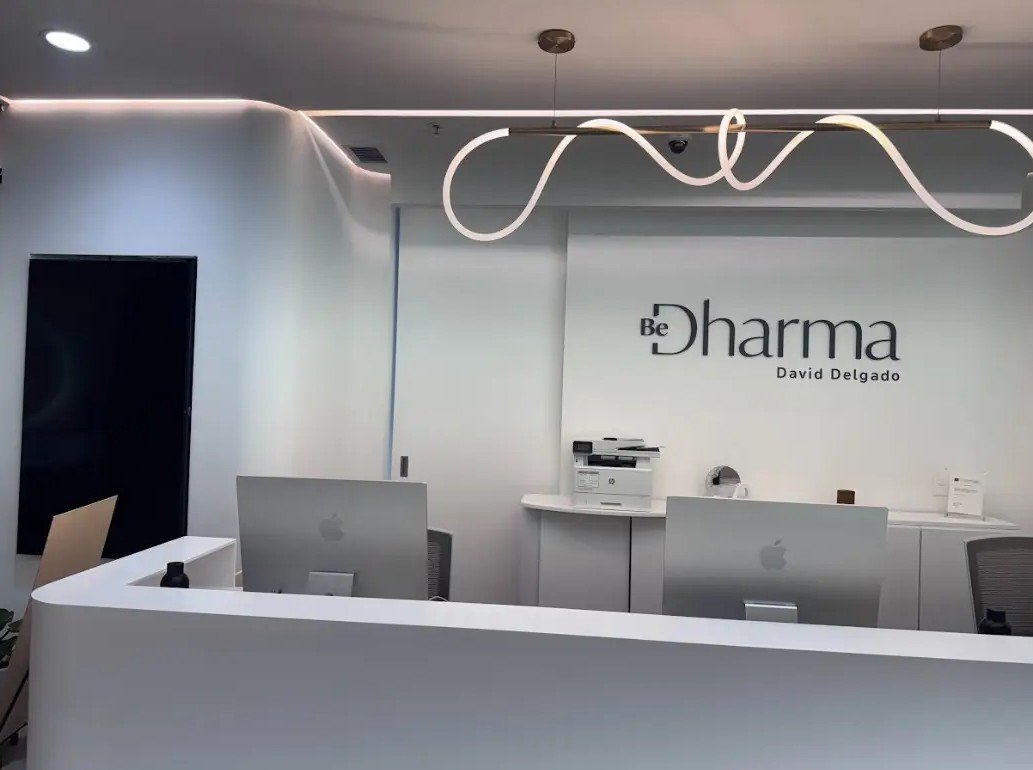
Dharma Hair clinic, Torre Medica Oviedo, El Poblado, Medellin
How much does it cost and what determines the investment
Cost is the question that dominates early-stage research, and it is also the question that is most commonly answered poorly. Most clinics either refuse to provide pricing until a consultation, which frustrates patients, or publish a single number that applies to everyone, which is misleading. The reality is that the cost of a restoration procedure depends on several interdependent factors, and understanding these factors protects you from both overpaying and underinvesting.
Factors that determine the cost
- Number of grafts: This is the primary cost driver. A session involving 1,500 grafts costs significantly less than one requiring 4,000 grafts. The number is determined by the extent of your hair loss and the density goals for the recipient area.
- Complexity of the case: Crown procedures require different graft distribution patterns than hairline reconstruction. Combined cases that address both the hairline and the crown in a single session require longer operating time and more planning.
- Surgeon qualifications: A procedure performed entirely by a board-certified plastic surgeon costs more than one delegated to technicians. The former ensures clinical accountability and artistic consistency. The latter reduces labor costs at the expense of quality control.
- Technology and materials: Advanced graft preservation solutions, precision instruments, trichoscopy, and PRP therapy add cost but measurably improve outcomes. Clinics that include these as standard incur higher per-procedure expenses than those that offer them as optional add-ons.
- Post-operative follow-up: Clinics that include twelve months of structured follow-up in the price are absorbing a cost that others pass on separately or simply do not provide. For international patients, follow-up is not optional. It is essential for monitoring a result that develops over a year.
At Dharma Hair, the investment for a complete procedure in 2026 ranges from approximately $3,000 to $6,000 USD, depending on the factors listed above. This includes the evaluation, the complete procedure, anesthesia, all medical supplies, the post-operative care kit, and twelve months of scheduled follow-up. There are no hidden fees, no surprise charges, and no upselling during the process.
What different candidate profiles typically invest
To give you a more concrete sense of how costs map to real cases, here are five common candidate profiles and the approximate investment range for each. These are based on typical cases at Dharma Hair and reflect 2026 pricing.
Colombia compared to other popular destinations
International patients typically narrow their search to four or five countries. Each has distinct advantages and limitations. The following comparison is based on publicly available regulatory information, pricing surveys, and the direct experience of patients who evaluated multiple destinations before choosing Dharma Hair. It is designed to help you compare objectively rather than relying on marketing claims from any single country.
| Factor | Colombia | Turkey | USA | Spain | Mexico |
|---|---|---|---|---|---|
| Surgeon training (years) | 12-14 | Variable | 12-16 | 11-13 | 10-12 |
| Regulatory oversight | Invima + Health Dept. | Variable by region | FDA + state level | Autonomous regions | COFEPRIS |
| Average cost (USD) | $3,000 - $6,000 | $1,500 - $4,000 | $8,000 - $15,000 | $5,000 - $10,000 | $3,000 - $7,000 |
| Surgeon performs full procedure | Yes (at premium clinics) | Rare (technician model) | Varies by clinic | Varies by clinic | Varies by clinic |
| Post-op follow-up included | 12+ months | Limited or none | Varies | Varies | 3-6 months typical |
| Communication in English | Bilingual teams | Translator required | Native | Limited | Variable |
| Flight time from US East Coast | 3-5 hours | 10-14 hours | Domestic | 8-10 hours | 3-5 hours |
| Same time zone as US | EST (no jet lag) | 7-8 hours ahead | Same | 6 hours ahead | CST (1 hour diff) |
| Patients processed per day | 1 (premium clinics) | 3-8 (high-volume) | 1-3 | 1-2 | 1-3 |
The comparison reveals something that headline pricing alone does not: the cheapest option is rarely the best value, and the most expensive option is not automatically superior. The countries that offer the strongest combination of clinical quality, regulatory transparency, personal attention, and reasonable pricing for international patients occupy a specific middle ground. Colombia, and specifically the premium clinical model practiced at Dharma Hair, sits precisely in that space.
Turkey dominates volume because its pricing is aggressive and its marketing budgets are enormous. But the trade-off is well documented: high patient volume means less individual attention, more reliance on technicians, and post-operative follow-up that is difficult to maintain across continents when the clinic is processing thousands of patients per year. The United States offers the comfort of domestic care but at prices that often include five-figure sums for the procedure alone, not counting the surgeon fee. Spain is clinically excellent but geographically and economically less accessible for North American patients.
Colombia's advantage is structural, not accidental. The combination of rigorous training, verifiable regulation, competitive economics, and a patient care culture that prioritizes relationship over throughput creates conditions that are difficult for other countries to replicate. Not because they lack talent, but because their cost structures and market dynamics push them toward different models.
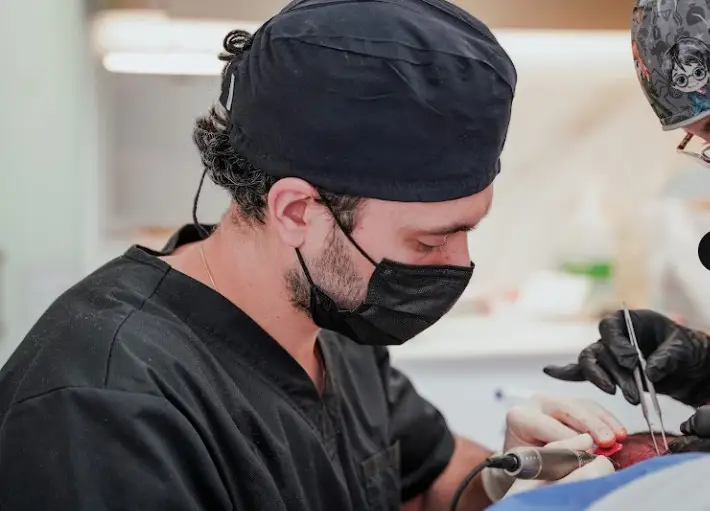
International patient consultation process at Dharma Hair, Medellin
Why Be Dharma Hair is trusted by international patients
Trust is earned through specifics, not slogans. International patients who choose Dharma Hair do so after evaluating multiple clinics in multiple countries. Understanding why they ultimately make that decision requires examining what this clinic does differently at each stage of the patient journey, from first contact through the twelve months of follow-up that follow the procedure.
A personalized approach that starts before the consultation
Most clinics begin the relationship when the patient contacts them. Dharma Hair begins the relationship when the patient finds them. The educational content on the website is not written by a marketing agency. It is written in consultation with the surgical team to ensure clinical accuracy. When a patient arrives at the consultation having already read detailed, honest content about what the procedure involves, the conversation starts at a more productive level. There is less time spent correcting misconceptions and more time spent discussing the specific plan for that patient's case.
The initial virtual consultation is not a sales call. It is a clinical evaluation conducted by Dr. David Delgado, who reviews the patient's photographs, discusses their medical history, explains what is achievable, and in some cases, advises against the procedure entirely. This honesty is rare in an industry where the financial incentive is to say yes to every patient. At Dharma Hair, turning away a patient who is not a good candidate is considered a professional obligation, not a lost sale.
Every patient receives a personalized surgical plan before committing. This plan includes the estimated graft count, the areas to be addressed, the expected density outcome, the timeline, and the investment. There are no surprises, no last-minute upsells, and no pressure to add services you do not need. What is quoted is what you pay.
Strategic location in El Poblado, Medellin
Dharma Hair operates from Torre Medica Oviedo, a modern medical tower located in El Poblado, the most internationally oriented neighborhood in Medellin. The clinic is within walking distance or a short ride from the best hotels in the city, international restaurants, pharmacies, and all the amenities an international patient needs during a recovery period of five to seven days.
The location was chosen deliberately. International patients need more than a good clinic. They need a comfortable environment where they can recover without logistical stress. El Poblado provides that: reliable ride-sharing services, walkable streets, English-speaking staff at most hotels and restaurants, and a climate that is consistently comfortable year-round. The altitude of 1,500 meters and average temperature of 22 degrees Celsius create recovery conditions that are clinically favorable and personally pleasant.
Transportation from Jose Maria Cordova International Airport takes approximately 45 minutes. The clinic coordinates transportation for international patients who request it, ensuring that the transition from airport to hotel to clinic is seamless. The goal is to eliminate every potential source of stress that could distract from the medical experience.
Premium care from evaluation to final result
The details that differentiate a premium clinical experience from a standard one are often invisible to the patient until they are absent. At Dharma Hair, these details are intentional and consistent.
- Single surgeon model: Dr. David Delgado performs every evaluation, designs every hairline, and executes every procedure personally. There is no delegation of surgical steps to technicians.
- Bilingual communication throughout: every document, every instruction, every follow-up message is available in English and Spanish. There is no language barrier at any stage.
- Twelve months of included follow-up: scheduled check-ins at defined intervals, conducted via video call for international patients, with the same medical team that performed the procedure.
- Direct surgeon access: international patients receive Dr. Delgado's direct contact information. Questions about progress, concerns about healing, and requests for reassurance are answered by the person who knows the case, not by a call center.
- Transparent pricing with no hidden costs: the quoted investment includes everything. Evaluation, procedure, anesthesia, materials, post-operative care kit, and follow-up. There are no additional charges.
- Comprehensive post-operative kit: patients receive a care kit with specialized shampoo, healing spray, sleeping pillow, and written instructions in their language.
- PRP therapy integrated when clinically indicated: platelet-rich plasma treatment is included as part of the comprehensive approach when the surgical team determines it will benefit the outcome.
"The relationship with an international patient does not end when they board the flight home. In many ways, it intensifies. The first three months after the procedure, when shock loss occurs and growth has not yet started, are the most anxious period. That is exactly when patients need their surgeon most. I make myself available because I would want the same thing if I were the one waiting for my results in another country." — Dr. David Delgado, board-certified plastic surgeon, Dharma Hair
The result of this approach is measurable in patient outcomes and in patient loyalty. International patients who undergo their procedure at Dharma Hair consistently refer family members and friends, not because of a referral program, but because the experience matched or exceeded their expectations. In a field where disappointment is common and trust is fragile, that organic referral pattern is the most honest metric of clinical quality.
Schedule your virtual consultation
The first step is a conversation. No commitment, no pressure. Send us your photographs and medical history, and Dr. Delgado will personally evaluate your case and discuss what is realistically achievable.
Torre Medica Oviedo, Cll 6 Sur #43A-227, Suite 701, Medellin
Monday to Friday 8:00 AM - 5:00 PM | Saturday 8:00 AM - 12:30 PM
Message us on WhatsAppIn-person evaluation in Medellin. Remote pre-assessment available for international patients worldwide.
Frequently asked questions
Continue reading about hair implant in Colombia
Scientific References
1. Harris JA. (2013). Follicular unit extraction. Facial Plast Surg Clin North Am. PMID: 24017979
2. Goldin J. Hair Transplantation. StatPearls [Internet]. PMID: 31613520
3. Avram MR. (2020). Robotic Hair Transplantation. Facial Plast Surg Clin North Am. PMID: 32312506
Dharma Hair — Specialized Hair Restoration
Torre Médica Oviedo, Cll 6 Sur #43A-227, Office 701, Medellín, Colombia
Phone/WhatsApp: +57 321 226 5964 · Email: clinicabedharma@gmail.com
Medical Director: Dr. David Delgado — Plastic Surgeon, SCCP Member


