
Hair Restoration in Medellín
Hair transplant before and after: real patients in Medellín, Colombia
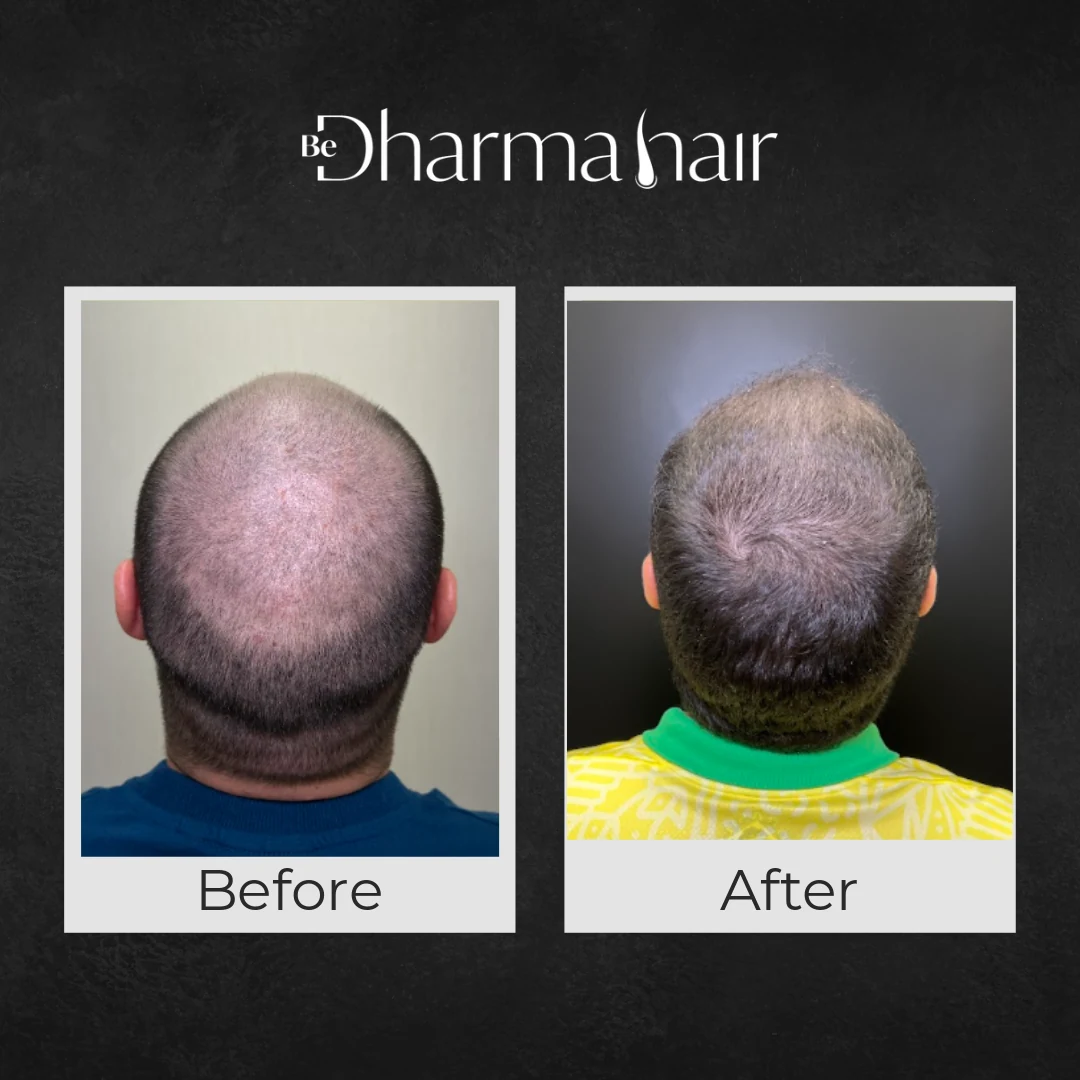
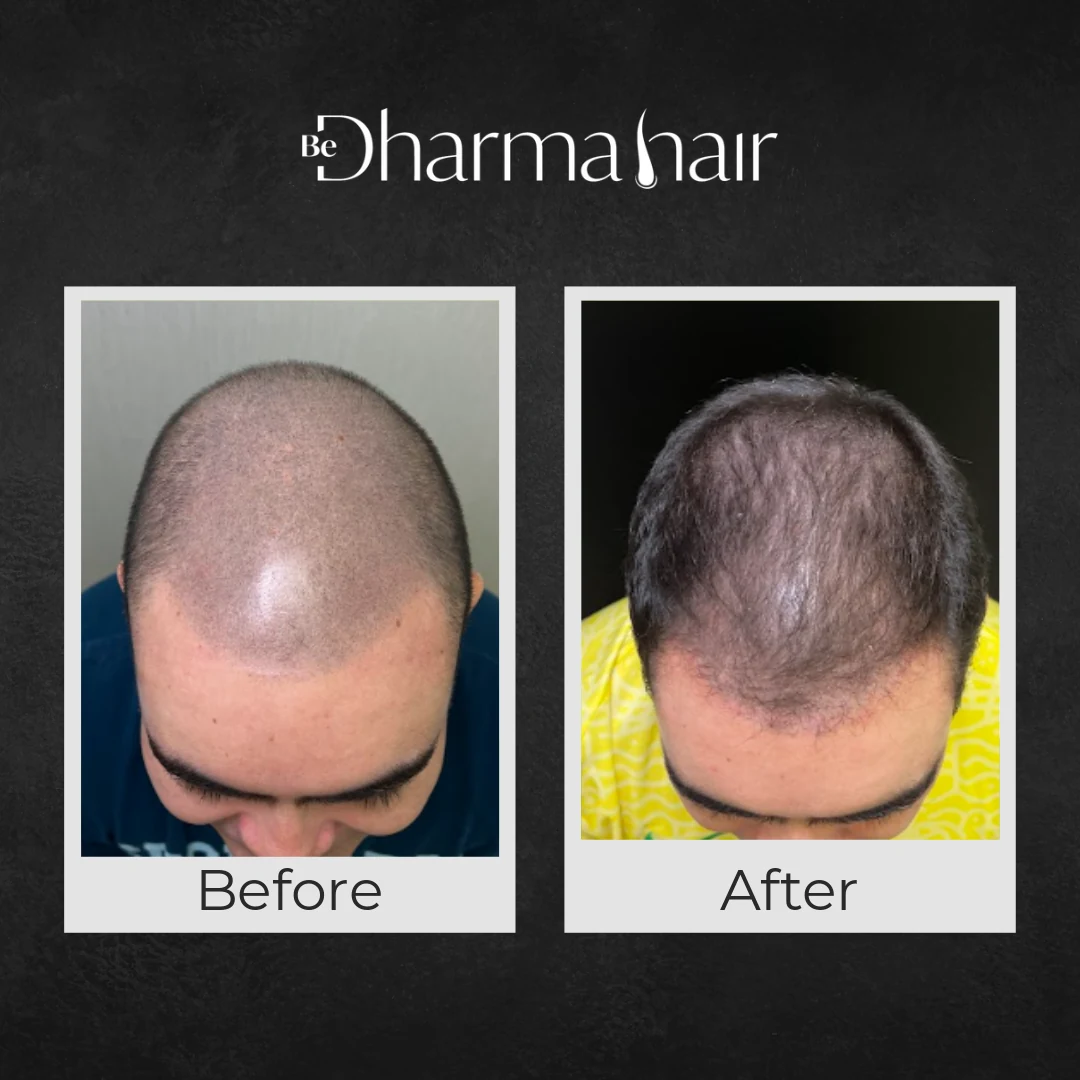
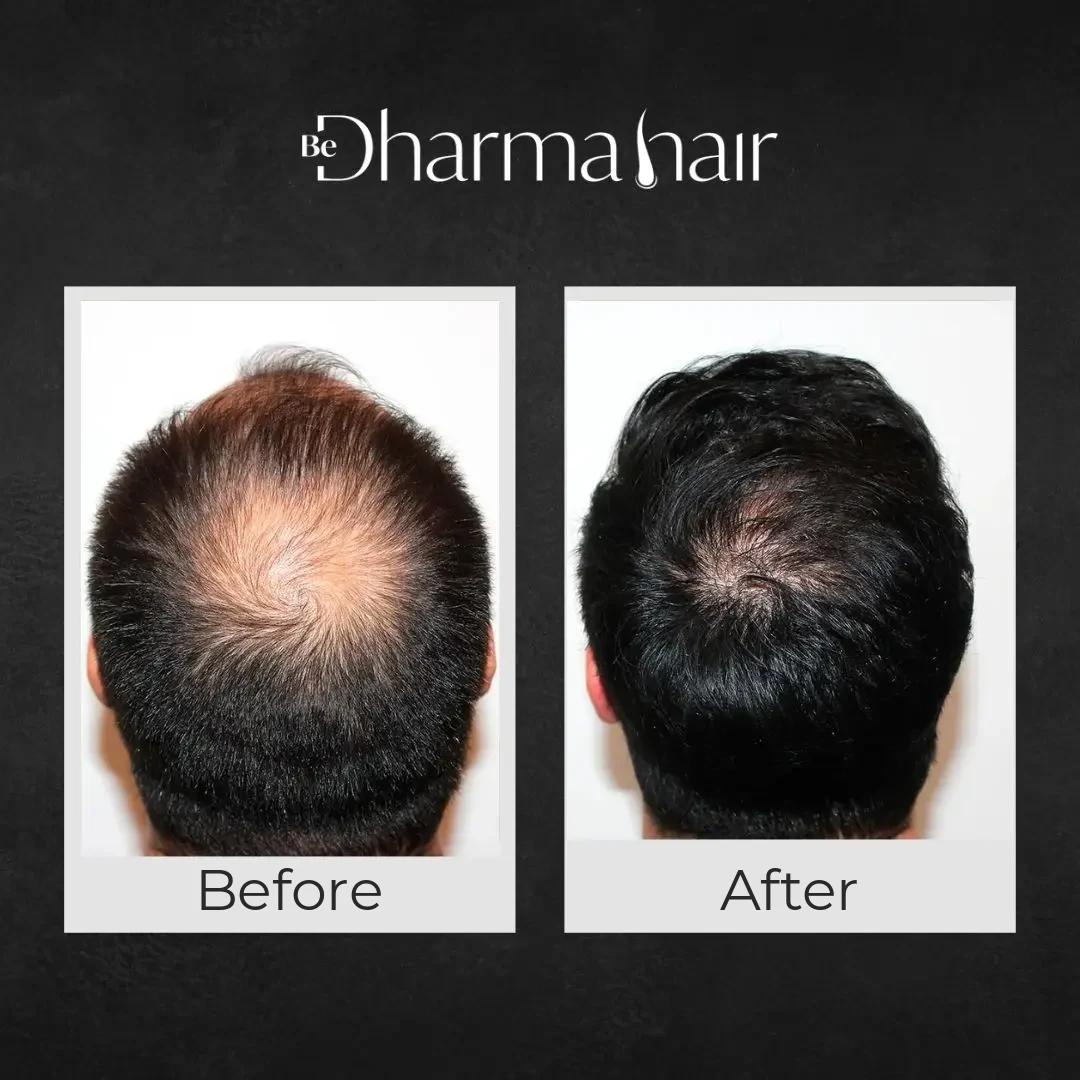
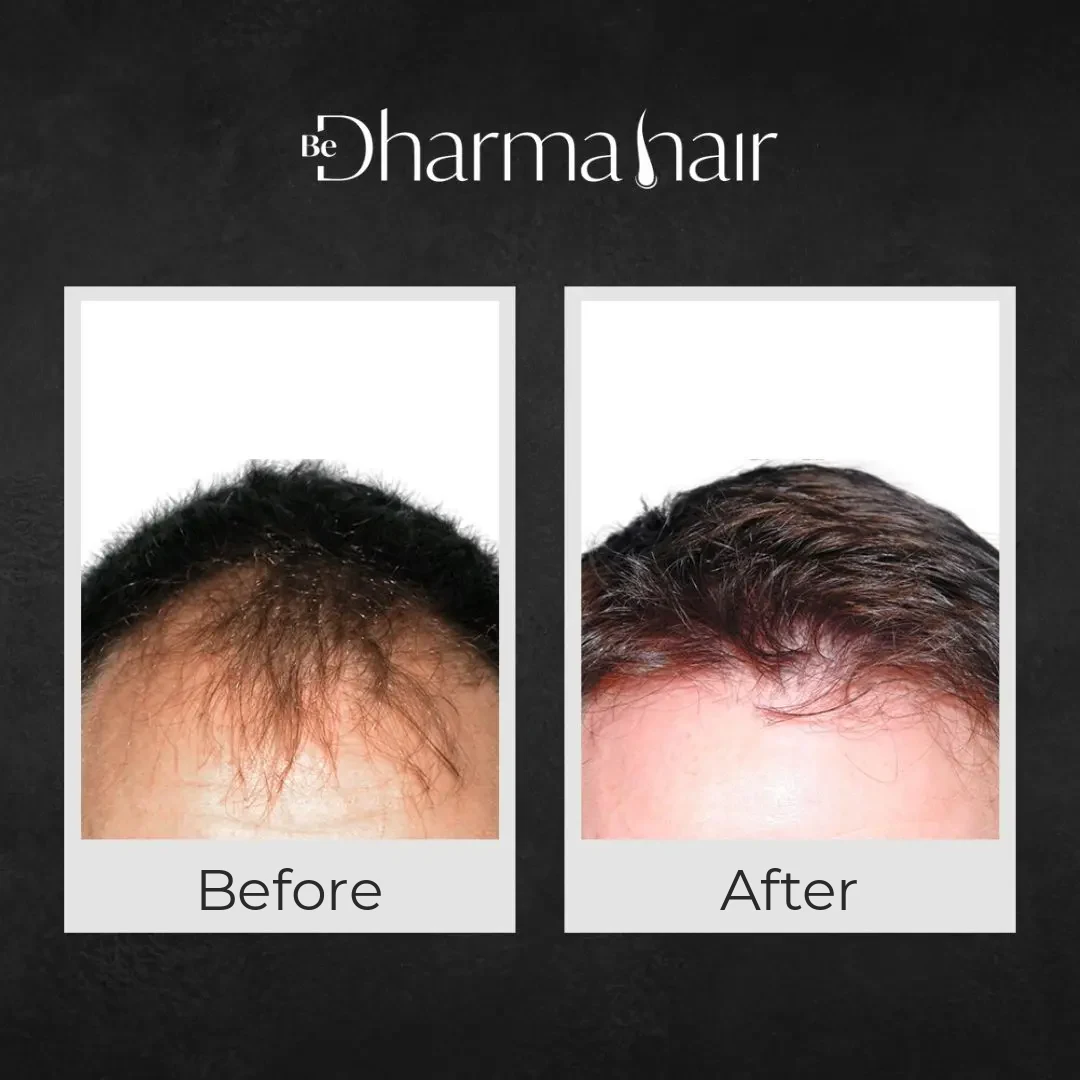
A hair transplant before and after shows the same patient’s scalp before surgery and once the transplanted hair has grown in, which usually takes 12 to 18 months. The cases below are Dharma Hair patients treated in Medellín with the ARTAS iX robotic system or manual FUE.
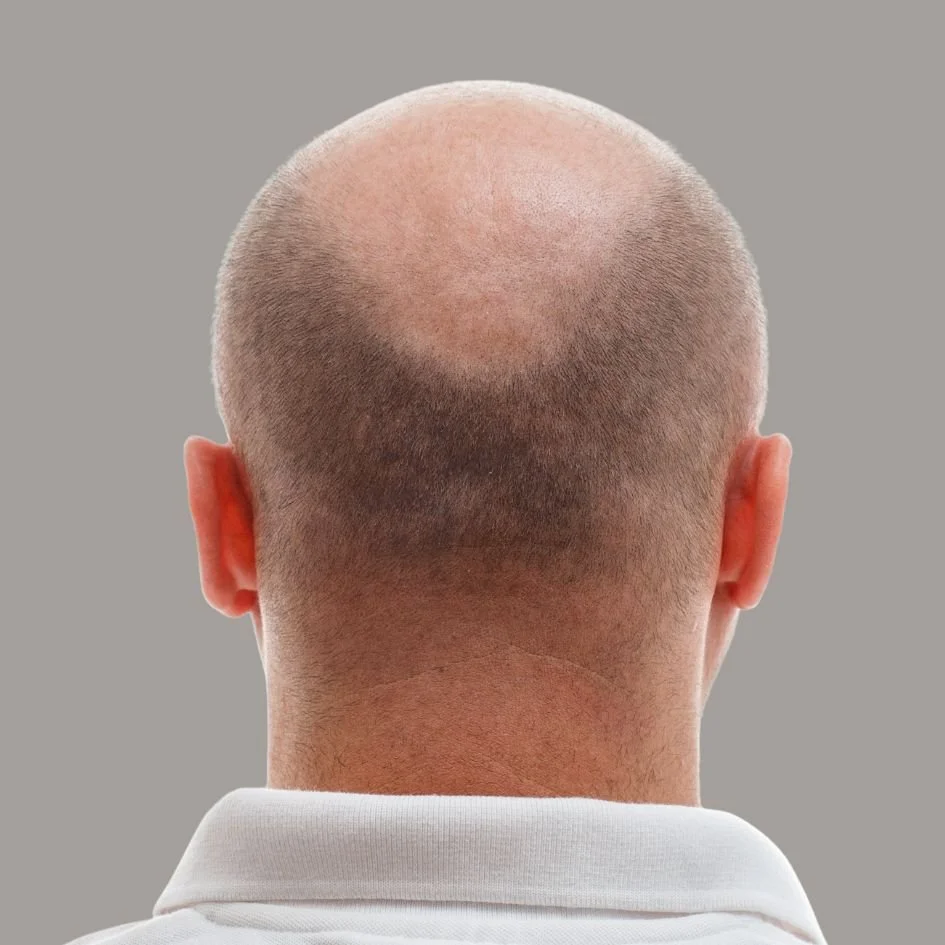
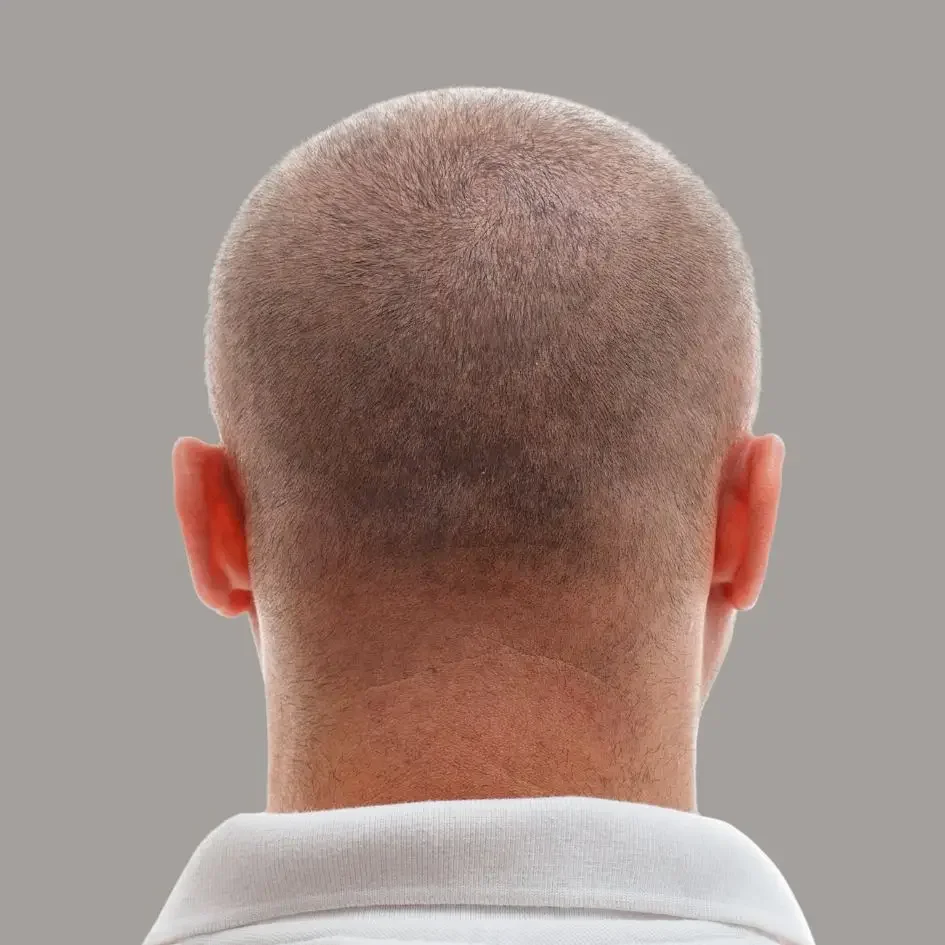
The image next to this text is an illustration of crown coverage. Real patient cases are shown below.


What does a before and after photo show? It compares the same area of the scalp, from the same angle, before the procedure and after the grafts have grown. A good comparison shows where the hair was placed, how the hairline was designed and how dense the area looks once the hair is fully grown. It does not show how long that took or how your own hair loss will evolve, so read it alongside your own assessment.
Before and after: hair transplant for men
Most of our patients come in for two areas: the hairline, which frames the face, and the crown, where thinning is hard to see in the mirror and easy to see in photos. Learn more about hair transplant for men.


Results vary from person to person. They depend on the degree of hair loss, the donor area, the hair’s thickness and color, and how closely aftercare is followed.
Want to know what is realistic for your hair?
Get a free photo assessmentWhat a hair transplant looks like on the day of surgery
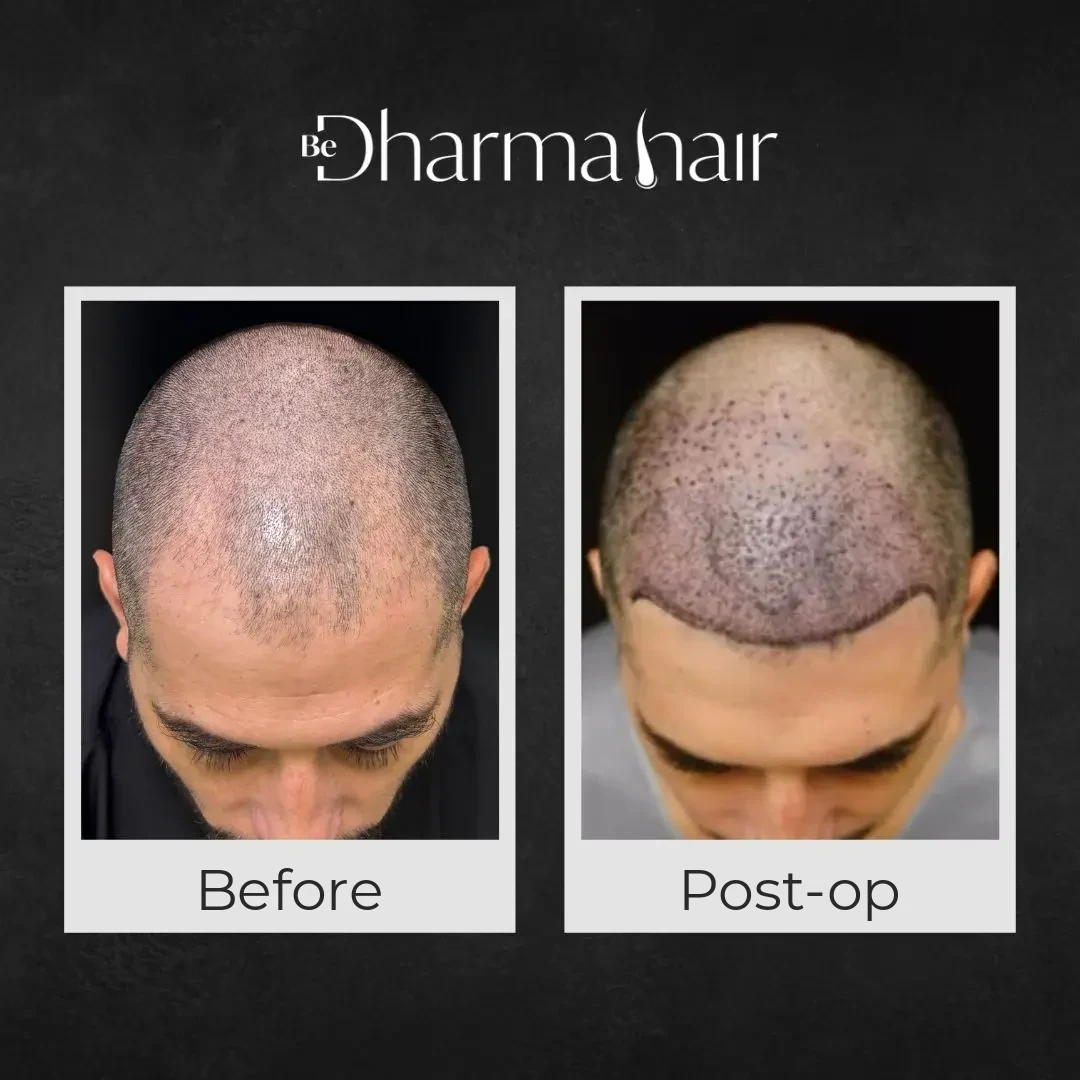
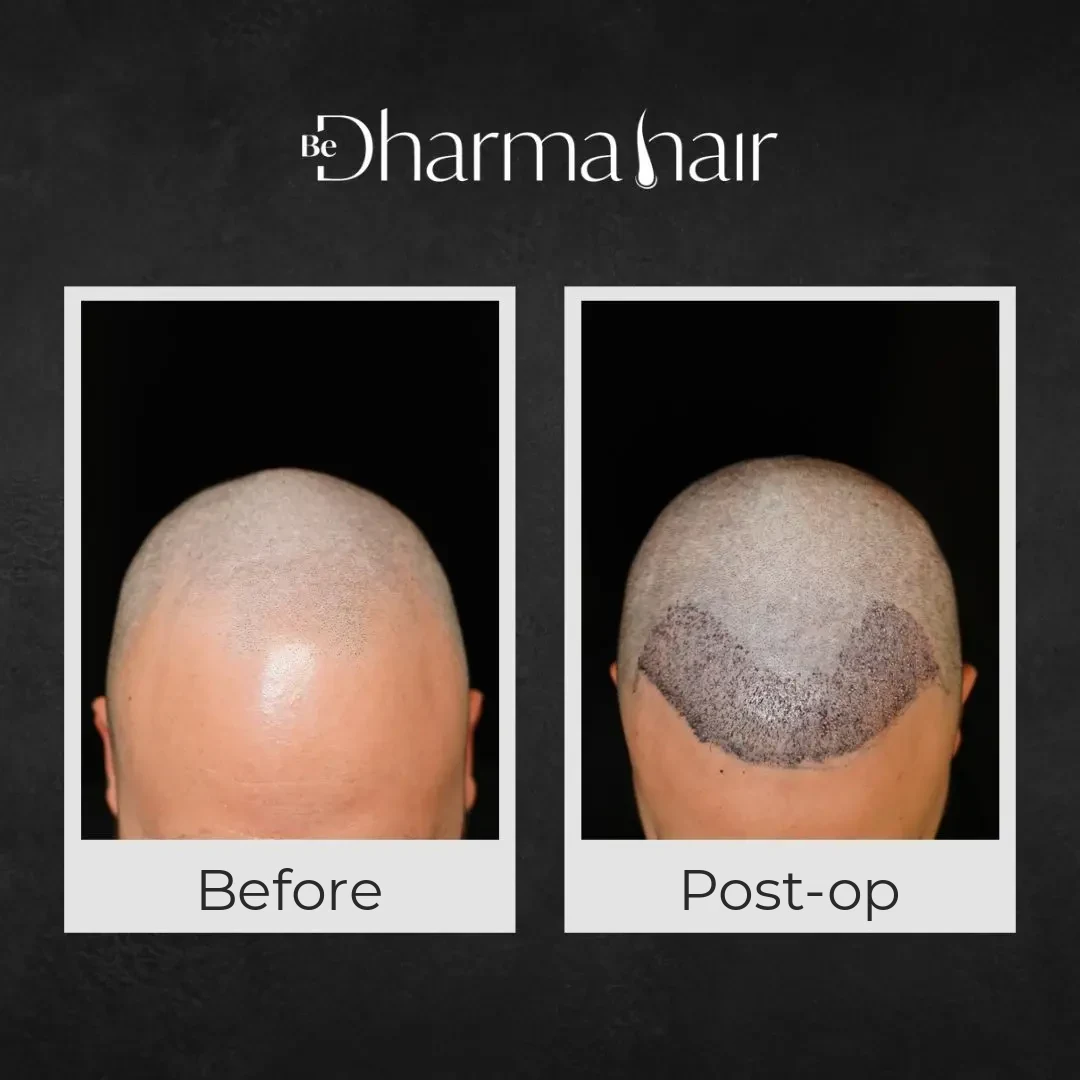
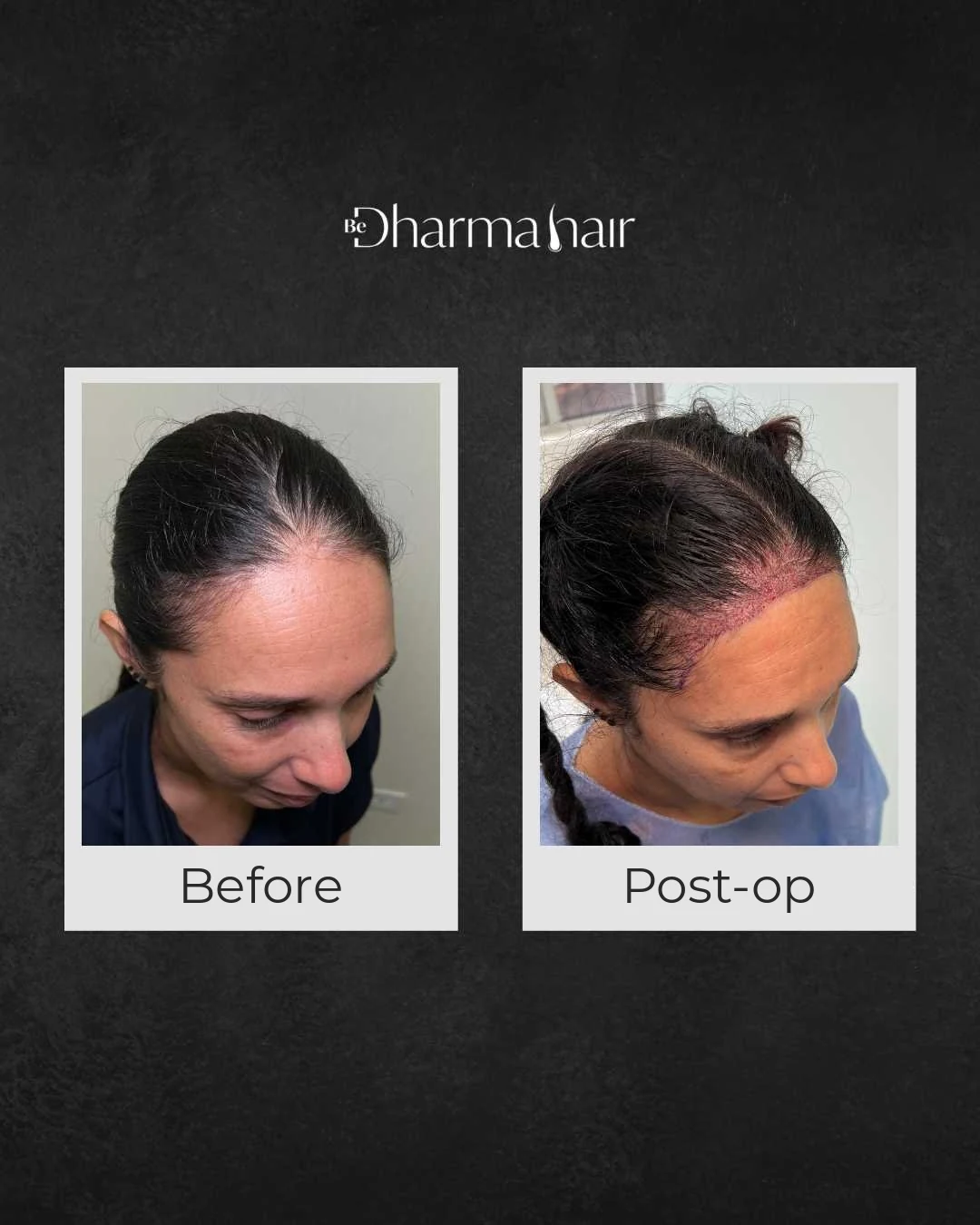
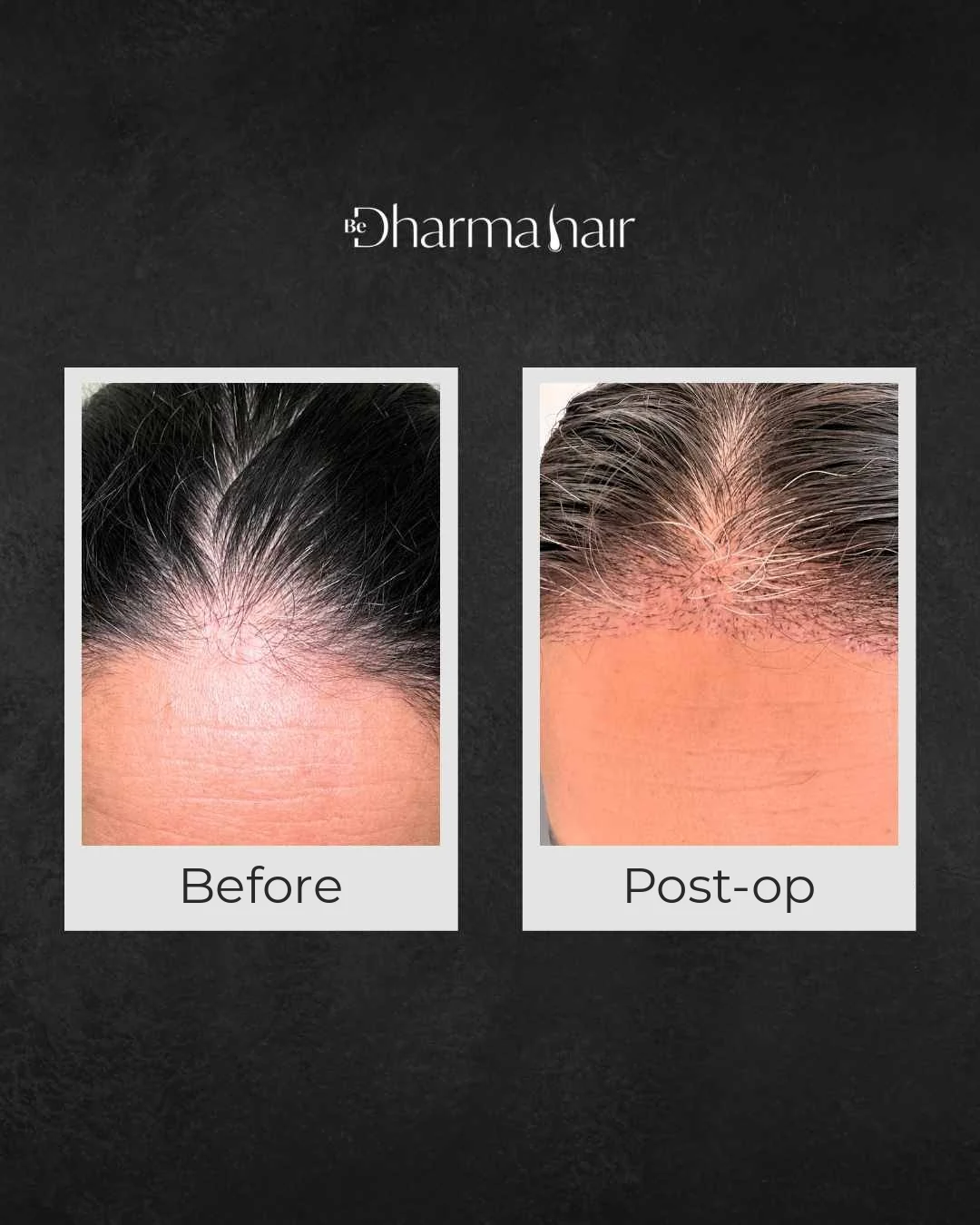
These two photos are not results. They show the scalp right after the grafts are placed, and we include them because this is the stage most patients worry about.


The small crusts and the redness fade over the first one to two weeks. What these photos let you see is the design: the shape of the hairline and how the grafts are spread to cover the area naturally.
Before and after: hair transplant for women
Women’s hair loss is usually diffuse. It thins along the part and the top of the head rather than leaving bare areas. The aim is to add density between existing hairs without a visible line. The two cases below were photographed on the day of surgery: they show where the grafts were placed and how the hairline was designed, not the final result. See how we plan a hair transplant for women.


Looking for beard or eyebrow restoration? See our beard transplant and eyebrow transplant pages.
Our standard
How to read a hair transplant before and after photo
Not every before and after shows the same thing. When you compare clinics, including ours, check these five points.
Same angle and lighting
A brighter light or a lower camera can make thin hair look thick.
Same hair length
Longer, styled or wet hair covers more scalp than the same hair cut short.
Time since surgery
A photo at day one shows where the grafts are, not how they will grow. Look for photos taken at least 12 months later.
Coverage that makes sense
One session covers a limited area. If an advanced case looks fully covered in one photo, ask how many sessions it took.
The donor area
A good result also leaves the back of the head looking natural.
This is the same standard we use with our own cases. It is why the post-op photos above are labeled as such and not shown as results.
Timeline
When will you see your own result?
Results come in stages. Knowing them in advance keeps the shedding phase from feeling like a setback.
Healing
Redness and small crusts heal.
Shedding
Most transplanted hairs shed. This is expected; the follicles stay in place.
New growth
Fine new hairs start to grow.
Visible change
The hair thickens and most of the change becomes visible.
Final result
Final density and texture.

Free virtual assessment
Start with a free virtual assessment from home
You don't need to travel to find out if you are a candidate. Send us four photos of your scalp and our medical team will review them.
Front
With your hairline visible
Both sides
Left and right
Top
From above
Back
Including the donor area
Take them about 30 cm (12 inches) from your scalp, in good light and with dry hair. We will tell you whether a transplant makes sense for your case, which technique fits best (ARTAS iX robotic or manual FUE) and how to plan your hair transplant in Colombia.
Send your photosFrequently asked questions
Are these photos of real patients?
Yes, the cases in the gallery are Dharma Hair patients treated in Medellín. The image at the top of the page is an illustration and is labeled as one.
How long after a hair transplant can you see the final result?
The final result usually takes 12 to 18 months. Most of the visible change happens between months 6 and 12, and density keeps improving after that.
Will my result look like these photos?
Not necessarily, because every case is different. Your result depends on how much hair you have lost, the density of your donor area and your hair type. Your assessment is where we tell you what is realistic.
Is a hair transplant permanent?
Transplanted hair comes from the back of the head, which is usually resistant to hair loss, so it tends to last. Your original hair can keep thinning, which is why some patients also need medical treatment or a second session years later.
Which technique was used in these cases?
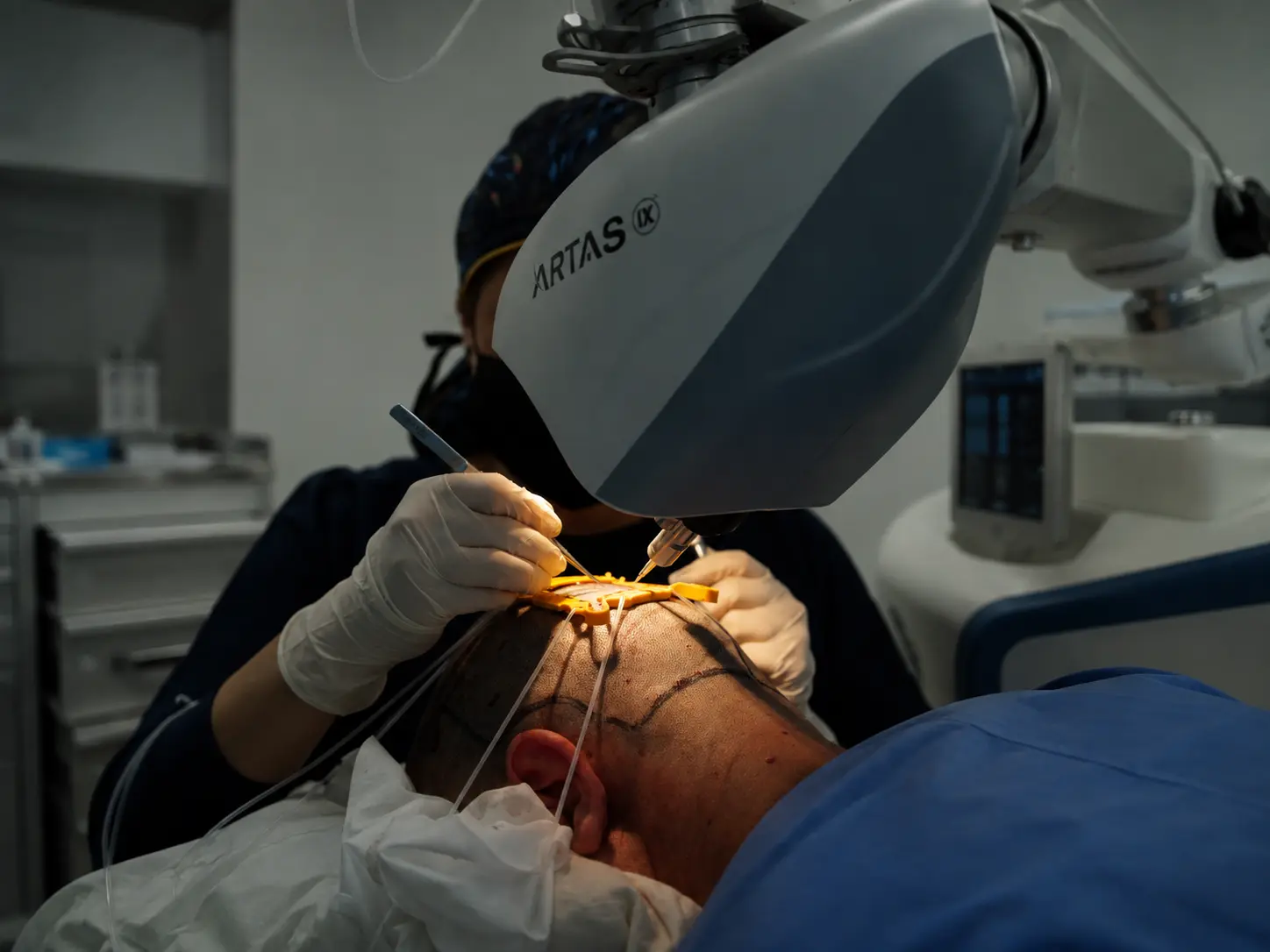
We use two techniques: ARTAS iX robotic extraction and manual FUE. Both take follicles one by one and leave no linear scar. The doctor chooses the technique after reviewing your donor area. See how both look in our FUE hair transplant before and after cases, or the robot at work in ARTAS robotic hair transplant before and after.
What are the risks of a hair transplant?
The most common effects are temporary: swelling, redness, crusts, numbness and the expected shedding of transplanted hair. Less often, a patient may have an infection, follicle inflammation (folliculitis) or lower graft growth than expected. Our medical team explains these risks during your assessment.
Who is not a good candidate?
People whose donor area is too thin to cover the bald area are not good candidates. The same applies to people with active scalp conditions or uncontrolled health problems, and to people who expect density that their donor hair cannot provide. The assessment tells you which group you are in before you plan anything.
Can I start the process from the United States?
Yes, the first step is a free virtual assessment with four photos. Once you are a candidate, we plan the procedure and your stay in Medellín with you, and follow-ups after you go home are remote.
Hair Restoration in Medellín
