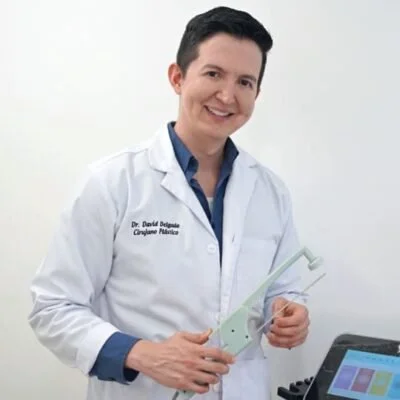
Dr. David Delgado
Plastic Surgeon · Medical Director, Dharma Hair
Member of the Colombian Society of Plastic Surgery (SCCP) · +10 years of experience
Published: julio 9, 2026 · Updated: julio 9, 2026
A hair transplant is not something you judge in a few days. It is a gradual transformation, and understanding your hair transplant month by month can make the entire experience clearer, calmer, and much more realistic. At Dharma Hair, we know that one of the biggest concerns patients have been not only how the procedure is performed, but what happens after: when the hair sheds, when it starts growing, and when the result begins to take shape.
That is why we guide each patient through a complete hair transplant recovery timeline, from the first medical evaluation to the months of visible progress that follow the procedure. A successful result depends on planning, technique, healing, and consistent follow-up. Our goal is not only to perform a precise hair transplant, but to help you understand every stage of your hair transplant growth timeline with medical clarity and personal support.
Personalized evaluation
Restore your hair and your confidence
Schedule an evaluation with our medical team and discover the hair restoration plan designed for your case: precise, safe, and natural-looking results.
Hair transplant recovery timeline: what happens during the first days?
The first few days after a hair transplant are not about seeing growth yet. They are about protecting the newly implanted follicles, allowing the scalp to heal properly, and following the right medical instructions from the beginning. This early stage is one of the most delicate moments in the hair transplant recovery timeline, because the grafts are still adapting to their new position.
At Dharma Hair, we explain this phase carefully before the procedure, so our patients know what is normal, what requires attention, and how to take care of the implanted area with confidence.
The first 72 hours after your hair transplant
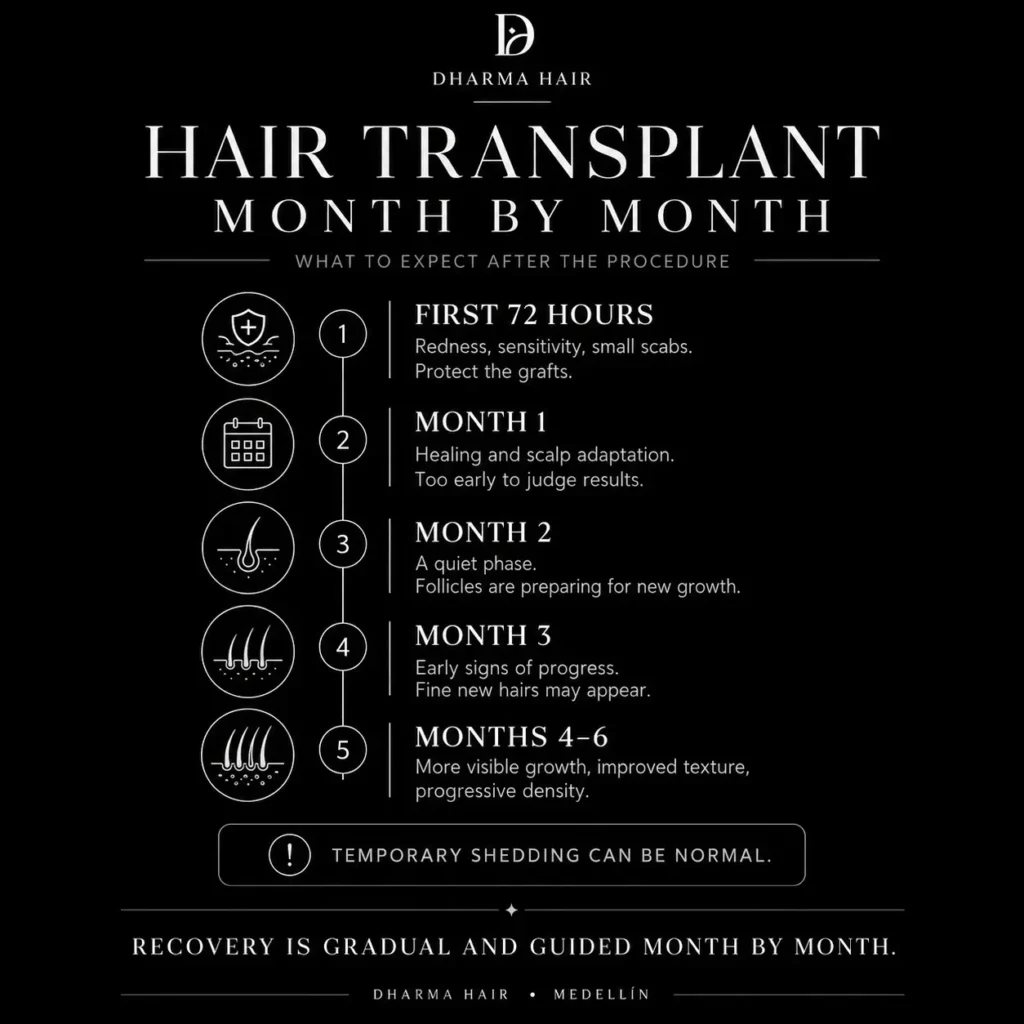
During the first 72 hours, it is common to experience mild sensitivity, redness, small scabs, and moderate swelling in the treated area. These signs are part of the natural healing response of the scalp and usually improve progressively when the patient follows the recommended care routine.
This does not mean the result is visible yet. At this point, the priority is stability. The implanted follicles need time to settle, and the patient’s role is to avoid friction, unnecessary touching, sweating, sun exposure, or any activity that could interfere with the healing process.
| Time after procedure | What may happen | Main goal |
|---|---|---|
| First 24 hours | Mild discomfort, redness, sensitivity | Protect the implanted follicles |
| 24 to 48 hours | Small scabs may become more visible | Avoid touching or rubbing the scalp |
| 48 to 72 hours | Swelling may appear or start improving | Follow medical instructions closely |
These early hair transplant recovery stages are temporary, but they are important. A calm, well-guided recovery helps create the right conditions for the following months of growth.
Why medical instructions matter from day one
A hair transplant is a medical procedure, and recovery should never be improvised. From the first day, patients need clear guidance about how to sleep, when and how to wash the scalp, what physical activities to avoid, and how to protect the treated area from sun exposure.
At Dharma Hair, we provide personalized instructions according to each case. We know that no two patients heal in the same way, so our follow-up is designed to support the patient during each phase, answer questions, and prevent unnecessary concern.
Essential care during the first days
| Care area | Why it matters |
|---|---|
| Washing | Helps keep the scalp clean without disturbing the follicles |
| Rest | Supports healing and reduces unnecessary inflammation |
| Sun protection | Prevents irritation and protects sensitive skin |
| Physical activity | Avoids sweating, pressure, and friction during the early healing stage |
| Follow-up | Allows the medical team to monitor progress and guide the patient |
For patients traveling for hair transplant recovery Colombia, this support becomes even more valuable. Having a specialized team available during the first days helps them feel safe, informed, and accompanied throughout the process.
Clinical note from Dharma Hair:
The first days are not the moment to judge the result. They are the foundation of recovery. When the patient follows the medical plan with discipline and the clinic provides close support, the process becomes clearer, more comfortable, and better controlled.
Hair transplant recovery stages: month 1 and the shedding phase
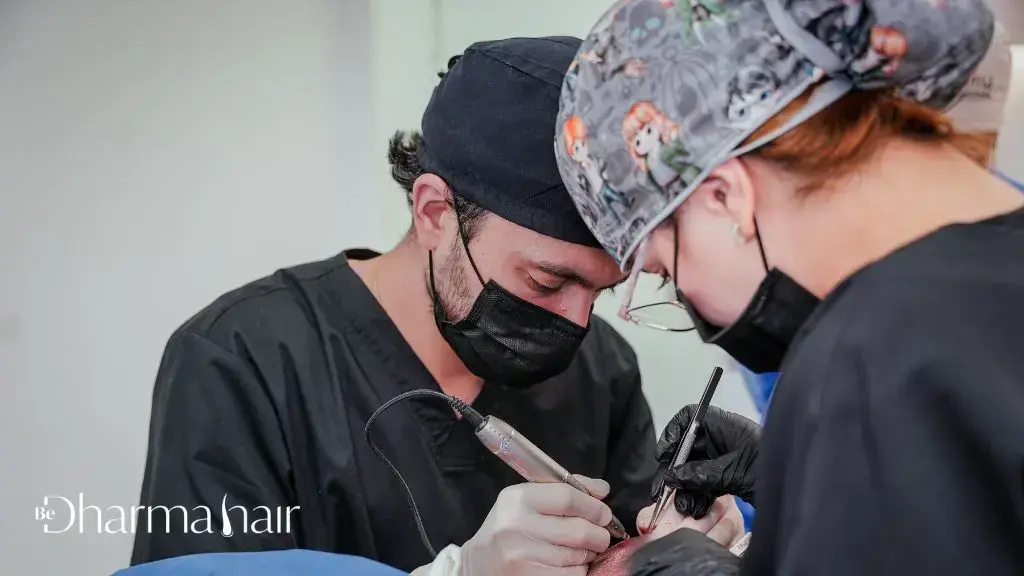
The first month is one of the most important hair transplant recovery stages, but it can also be one of the most misunderstood. Many patients expect to see immediate growth, when this stage is more about healing, adaptation, and protecting the work that has already been done.
At Dharma Hair, we always explain that a hair transplant should be understood as a process. When you follow your hair transplant month by month, you begin to see that every phase has a purpose, even the ones that may feel slow or uncertain.
Month 1: healing, scabs and early adaptation
During the first month, the scalp gradually becomes more stable. The small scabs that appear after the procedure usually begin to fall off naturally, redness starts to improve, and the treated area may look cleaner and more settled with each passing week.
This is also the stage when the patient starts feeling more comfortable with daily activities, always following the medical instructions provided by the team. However, it is still too early to judge the result. The visible appearance of the scalp during the first month does not define the success of the transplant.
| During month 1 | What it usually means |
|---|---|
| Small scabs begin to fall | The scalp is healing progressively |
| Redness starts to improve | The skin is adapting after the procedure |
| Mild sensitivity may remain | The area is still recovering |
| The implanted area looks more stable | The follicles are settling into their new position |
| No major growth is visible yet | This is normal at this stage |
The goal during this month is not to rush the result. It is to allow the scalp to recover properly and to keep the implanted follicles protected while the biological process continues beneath the surface.
Hair transplant shedding phase: why temporary hair loss is normal
One of the moments that can worry patients the most is the hair transplant shedding phase. After the first few weeks, some of the transplanted hairs may begin to fall out. For many patients, this can feel confusing because they see hair loss after having just completed the procedure.
But in many cases, this temporary shedding is part of the normal recovery process. Visible hair may fall, while the follicle remains active under the skin. What matters is not only what you see on the surface, but what is happening at the follicular level.
What is normal during the shedding phase?
- Seeing some transplanted hair fall during the first weeks.
- Feeling that the result looks less dense than expected.
- Noticing that growth seems paused for a while.
- Experiencing emotional concern because the visible change is not yet clear.
Clinical note from Dharma Hair:
Shedding does not automatically mean that the transplant has failed. In many patients, it simply means that the follicle is entering a resting phase before producing new hair. This is why follow-up matters: we help patients understand what is expected, what should be monitored, and when the next phase of growth may begin.
Hair transplant growth timeline: what to expect from months 2 to 6
After the first month, the recovery becomes less focused on visible healing and more focused on biological growth. This is where the hair transplant growth timeline starts to become especially important. Some months may feel slow, while others bring more visible changes in density, texture, and coverage.
At Dharma Hair, we guide patients through this period with realistic expectations. Hair restoration is not an instant change; it is a progressive transformation that needs time, medical follow-up, and patience.
Month 2: patience while the follicles prepare for new growth
Month 2 can be emotionally challenging because, visually, it may seem like not much is happening. The scalp may look healed, but the new hair growth has not fully started yet. This does not mean the process has stopped.
Inside the skin, the follicles are adapting, resting, and preparing for the next growth cycle. This is why we remind our patients that month 2 is not a month to evaluate the outcome. It is a transition stage.
| Month 2 experience | How we explain it to our patients |
|---|---|
| Little visible growth | The follicles may still be in a resting phase |
| Lower density than expected | This can be part of the normal timeline |
| Less redness or irritation | The scalp is becoming more stable |
| Doubts about progress | Follow-up helps clarify what is normal |
At this point, medical guidance is especially valuable. Patients often need reassurance, not because something is wrong, but because the visible transformation has not fully started yet.
Hair transplant after 3 months: early signs of progress
The hair transplant after 3 months stage is often the moment when patients notice early signs of progress. This does not mean the result is already visible, but it can be the beginning of a more encouraging phase.
At around 3 months, some patients may start seeing fine new hairs, subtle changes in density, and the first signs that the hairline is beginning to evolve. These changes are usually gradual, but they can be meaningful because they show that the growth phase is starting.
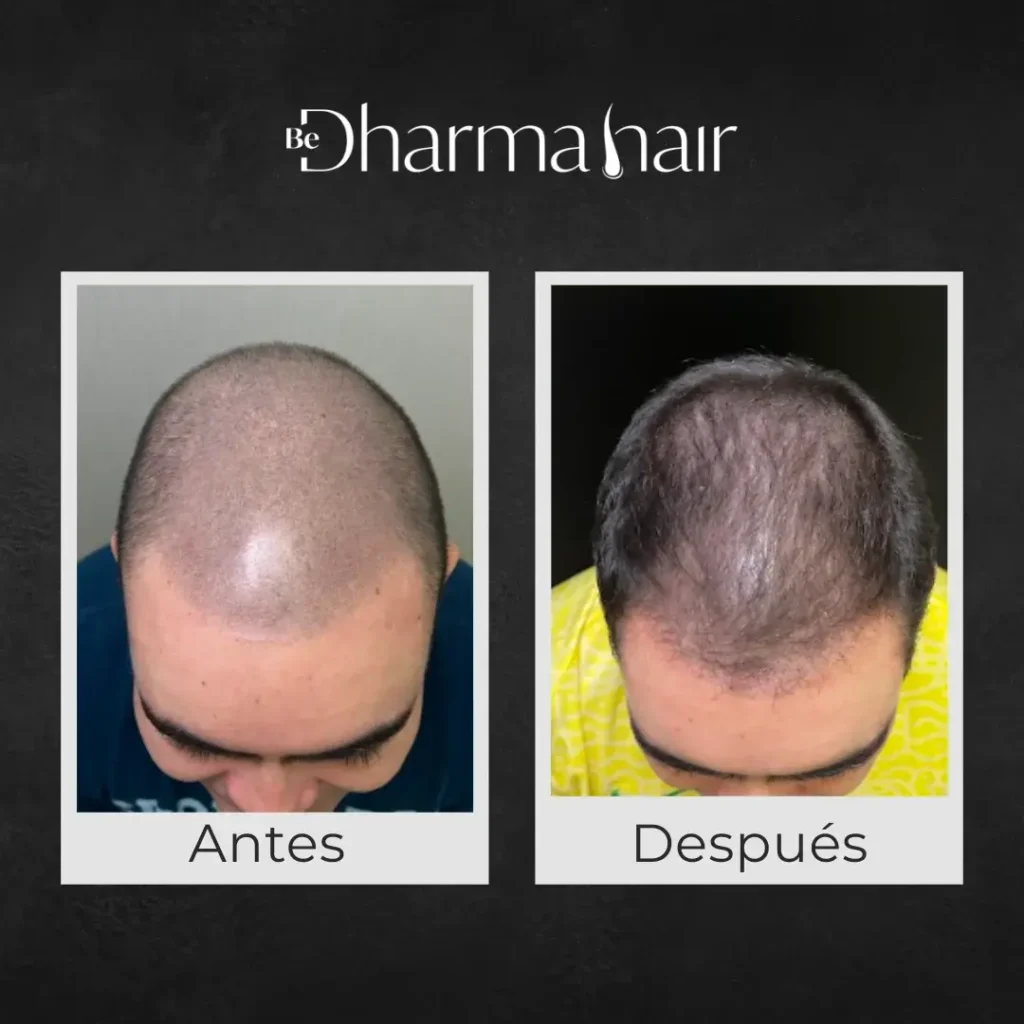
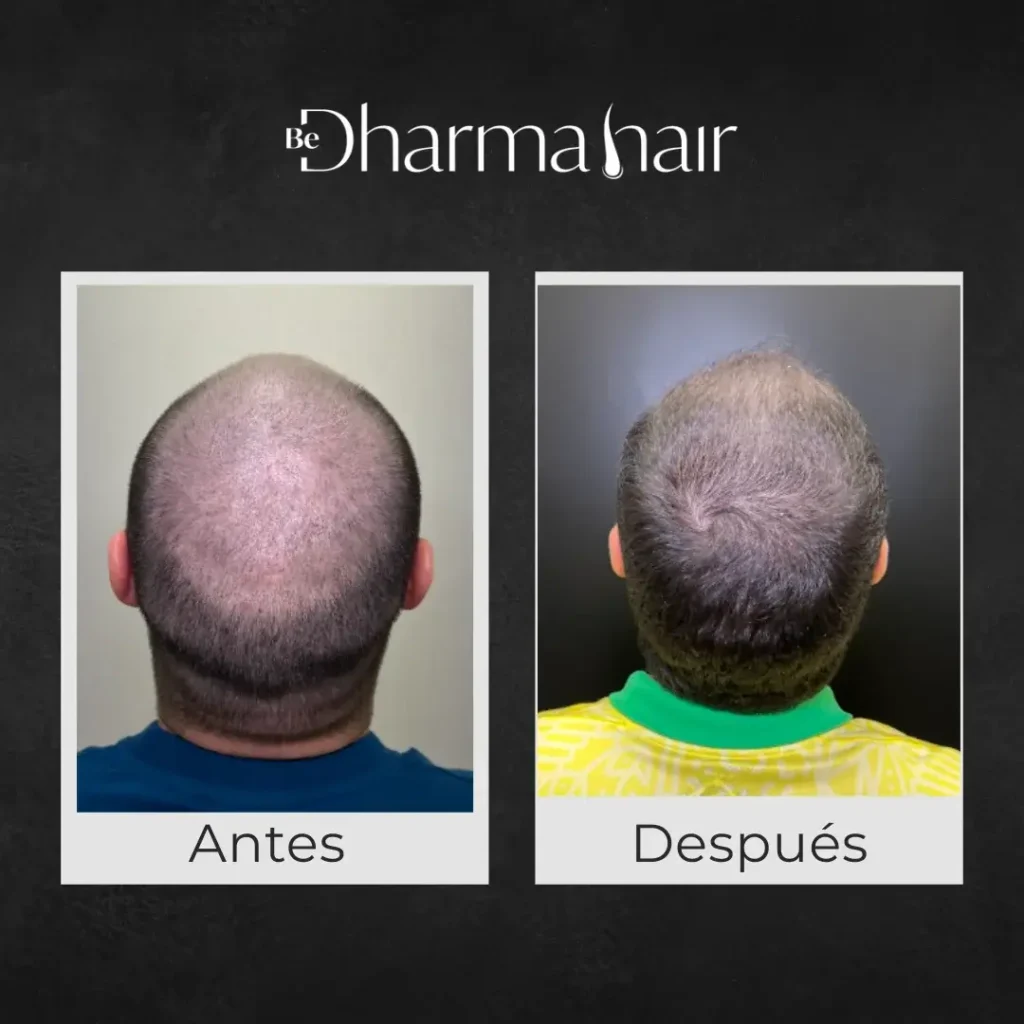
In one of our Dharma Hair cases, the 3-month follow-up showed early progress in the treated area: small new hairs, a more defined frontal frame, and a visible improvement compared to the initial healing stage. We always present this type of result with honesty: 3 months is not the result, but it can be a promising checkpoint in the journey.
At 3 months, patients may notice:
- Fine new hairs beginning to appear.
- Subtle improvement in the hairline.
- Early density changes in the treated area.
- A more natural transition between implanted and existing hair.
- Greater confidence as the process becomes more visible.
Hair transplant results after 3 months: what a real case can show
When we talk about hair transplant results after 3 months, we are talking about early evolution, not completion. This is an important distinction. A patient can show visible progress in 3 months, but the hair still needs time to gain strength, thickness, and density.
A real 3-month case can help patients understand what early growth may look like. It can also reduce anxiety because it shows that the process does not move from procedure to result in one step. There are intermediate stages, and each one provides valuable information.
Suggested visual resource for this section:
Include a 3-month case photo with a short medical caption such as:
¿Tienes dudas sobre tu caso?
Habla con nuestro equipo médico. Una valoración personalizada es la única forma de saber si el implante capilar es para ti.
Escríbenos por WhatsApp- “Three-month follow-up: early signs of growth are visible, with new fine hairs beginning to appear in the treated area. This is not the result, but it shows a positive stage within the patient’s hair transplant growth timeline”
- This type of content helps patients understand the process with real expectations. It also allows us to educate without being overpromising, which is essential in a medical procedure.
Months 4 to 6: visible growth and progressive density
Between months 4 and 6, the process usually becomes more visible. The new hair may begin to grow with more presence, the texture can become stronger, and the treated area may show progressive improvement in coverage.
For many patients, this is the stage when the transformation starts feeling more real. The hairline may look more defined, the density may begin to improve, and the patient can start visualizing how the result may continue developing over the following months.
| Timeline | What patients may begin to see |
|---|---|
| Month 4 | New hair becomes more noticeable |
| Month 5 | Texture and coverage may improve |
| Month 6 | Density can look more defined and consistent |
Even for 6 months, the result is still evolving. That is why our approach at Dharma Hair is not limited to performing the transplant. We accompany the patient throughout the process, helping them understand each stage with medical clarity, realistic expectations, and personalized follow-up.
ARTAS hair transplant Colombia: how technology can support precision and recovery
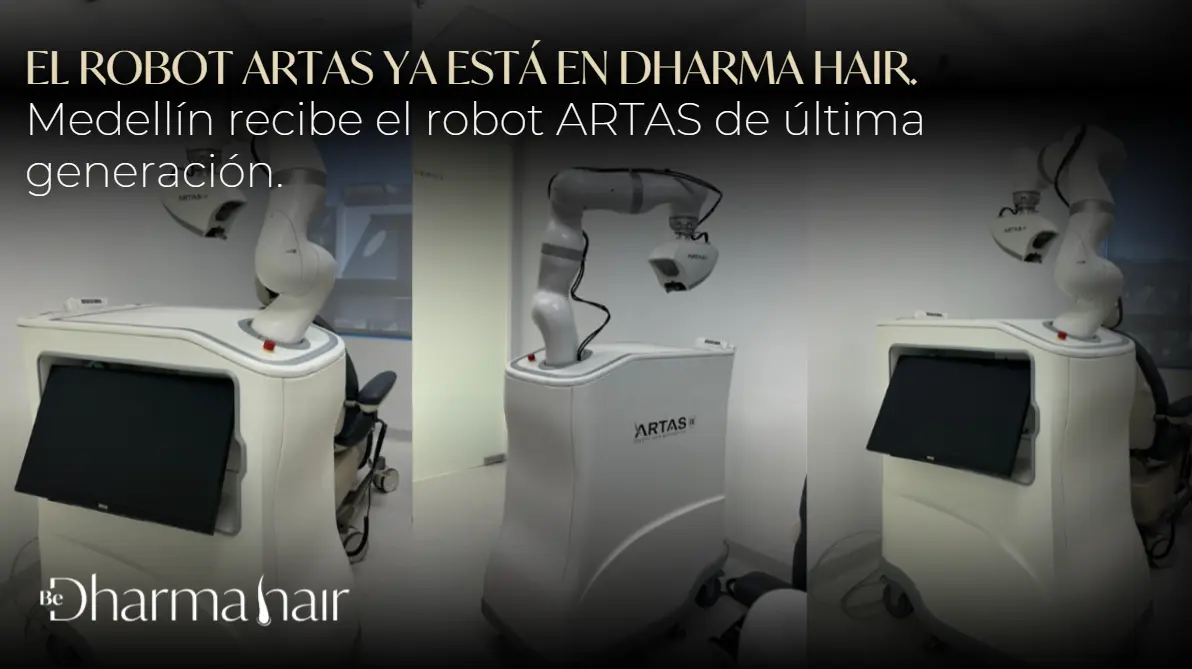
Technology does not replace medical judgment. In hair restoration, the best results come from combining diagnosis, planning, surgical experience, follicle care, and the right tools. That is why, when we talk about ARTAS hair transplant Colombia, we talk about technology as part of a complete medical process, not as an isolated solution.
At Dharma Hair, ARTAS allows us to approach follicular unit extraction with a high level of precision, especially in the donor area. This matters because every follicle is valuable. The way follicles are selected, extracted, handled, and implanted can influence the quality of the procedure and the patient’s overall hair transplant recovery timeline.
What makes ARTAS different in a hair transplant procedure?
ARTAS is an image-guided, computer-assisted robotic system designed to help physicians identify and extract follicular units from the scalp during hair transplantation. The U.S. FDA 510(k) summary describes ARTAS as a system intended to assist physicians in identifying and extracting follicular units, under medical direction, using the principles of Follicular Unit Extraction.
In simple terms, the robot supports the medical team during a specific part of the procedure: follicular unit harvesting. It can help evaluate the angle, direction, and distribution of hair in the donor area, allowing a more controlled extraction process.
This does not mean the robot “does everything.” The physician and clinical team remain essential in-patient selection, hairline design, donor area planning, graft handling, implantation strategy, and follow-up. ARTAS is a precision tool; the medical plan is what gives that precision a purpose.
Can ARTAS help with the hair transplant recovery timeline?
ARTAS may support a more organized and controlled experience, particularly during follicular unit extraction. Because it assists in identifying and harvesting follicular units with image-guided technology, it can help the team work with greater consistency in the donor area.
However, we are careful with expectations. ARTAS does not guarantee immediate recovery, and it does not eliminate the natural biological stages of healing, shedding, and growth. A good hair transplant recovery timeline still depends on several factors: the patient’s scalp condition, donor area quality, surgical planning, graft handling, post-operative care, and adherence to medical instructions.
Clinical literature has evaluated robotic FUE as a minimally invasive approach, especially because it avoids the linear scar associated with strip harvesting and extracts follicular units individually. A review on robotic follicular unit extraction notes that one of the main advantages of robotic FUE, compared with traditional strip harvesting, is its minimally invasive nature and the lack of a linear scar.
For the patient, this means the recovery may feel more comfortable and discreet when the donor area is properly managed. Still, healing is personal. Our role at Dharma Hair is to guide the patient through every stage, monitor progress, and make sure the recovery is understood with medical clarity.
Why precision matters for natural-looking results
Natural-looking results are not only about adding more hair. They depend on where each follicle is placed, how the hairline is designed, how density is distributed, and how well the implanted hair blends with existing hair.
Precision matters from the beginning. When follicular units are selected and extracted carefully, the medical team can protect valuable grafts and plan the restoration with a more strategic approach. Recent comparative research on ARTAS and FUE in male androgenetic alopecia has evaluated safety and efficacy, reporting that ARTAS was found to be safe and effective for selecting and harvesting follicular units, while also emphasizing that outcomes depend on multiple clinical factors.
Choose Dharma Hair for a hair transplant in Medellín
At Dharma Hair, located in Torre Médica Oviedo in Medellín, we understand that every patient arrives with a different story: a receding hairline, loss of density, concerns about the donor area, or the desire to feel more confident again. That is why we begin with a careful evaluation of your hair loss pattern, donor area quality, expectations, facial proportions, and the real viability of the procedure. For us, a hair transplant Colombia experience must be ethical, personalized, and medically guided from the very beginning.
Choosing Dharma Hair means you are not going through the process alone. We guide you through the first days, the hair transplant recovery Colombia stage, the shedding phase, monthly progress, and long-term care recommendations. If you are looking for the best hair transplant Medellin experience, our goal is to offer advanced technology, close follow-up, and a human team that helps you understand your hair transplant month by month with clarity and confidence.
Frequently Asked Questions about hair transplant month by month
1. What happens during the first days after a hair transplant?
During the first days, it is normal to experience mild sensitivity, redness, small scabs, and some swelling in the treated area. This stage is focused on protecting the newly implanted follicles and allowing the scalp to begin healing properly. Following the medical instructions from day one is essential to support a safe and organized hair transplant recovery timeline.
2. When do the scabs fall off after a hair transplant?
Small scabs usually begin to fall gradually during the first days and weeks after the procedure. They should not be scratched or removed forcefully, because the implanted area is still healing. At Dharma Hair, we guide each patient on how to wash the scalp correctly and how to care for the area without disturbing the follicles.
3. Is shedding normal after a hair transplant?
Yes. The hair transplant shedding phase can be a normal part of the process. Some transplanted hairs may fall during the first weeks, which can be concerning for patients, but it does not necessarily mean that the follicles are lost. In many cases, the follicle remains active under the skin and later begins a new growth cycle.
4. What should I expect during the first month?
During the first month, the scalp is adapting. Redness may improve, scabs may disappear, and the implanted area may look more stable. However, this is still too early to evaluate the final result. A hair transplant must be understood month by month, because the most visible changes usually appear later in the process.
5. Why does month 2 feel slow after a hair transplant?
Month 2 can feel slow because visible growth may still be limited. The scalp may look healed, but the follicles can still be in a resting or preparation phase. This stage requires patience and proper follow-up, because the absence of major visible growth does not mean that the process has stopped.
6. What happens with a hair transplant after 3 months?
A hair transplant after 3 months may begin to show early signs of progress. Some patients start noticing fine new hairs, subtle density changes, or a more defined hairline. However, this is still an early stage. The result is not final, but it can be an encouraging checkpoint within the full growth timeline.
7. Are hair transplant results after 3 months final?
No. Hair transplant results after 3 months are not final. At this point, patients may see initial growth, but the hair still needs time to become stronger, thicker, and more consistent. The final result continues to develop progressively over the following months, depending on each patient’s biology, care routine, and medical follow-up.
8. When does hair growth become more visible?
Hair growth often becomes more noticeable between months 4 and 6. During this period, the new hair may gain more presence, texture, and coverage. Density can start to look more defined, although the result may continue improving beyond this stage as part of the complete hair transplant growth timeline.
9. Can ARTAS help with hair transplant recovery?
ARTAS can support a more precise and controlled extraction process, especially in the donor area. This may contribute to a more organized experience during the procedure and recovery. However, ARTAS does not guarantee immediate healing or final results. Recovery also depends on the patient’s scalp condition, medical planning, aftercare, and follow-up.
10. Why choose Dharma Hair for a hair transplant in Medellín?
At Dharma Hair, we combine medical evaluation, advanced technology, personalized planning, and close follow-up. We are located in Torre Médica Oviedo in Medellín, and we support each patient through every stage of the process: from diagnosis and procedure planning to recovery, shedding, monthly progress, and long-term care. Our goal is to help patients understand their hair transplant month by month with clarity, confidence, and human support.
References
- U.S. Food and Drug Administration. 510(k) Premarket Notification K103428: The ARTAS System from Restoration Robotics.
- Avram, M. R., & Watkins, S. A. Robotic follicular unit extraction in hair transplantation.
- Zhu, Y., et al. A comparative study on the application of robotic hair restoration technology in male androgenetic alopecia patients.
Dharma Hair — Specialized Hair Restoration
Torre Médica Oviedo, Cll 6 Sur #43A-227, Office 701, Medellín, Colombia
Phone/WhatsApp: +57 321 226 5964 · Email: clinicabedharma@gmail.com
Medical Director: Dr. David Delgado — Plastic Surgeon, SCCP Member