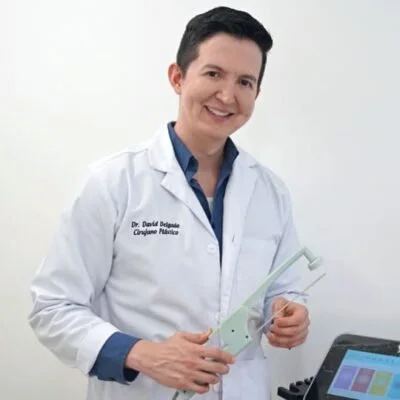
Dr. David Delgado
Plastic Surgeon · Medical Director, Dharma Hair
Member of the Colombian Society of Plastic Surgery (SCCP) · +10 years of experience
Published: noviembre 4, 2026 · Updated: noviembre 4, 2026
A specialized hair transplant clinic should do more than extract and implant hair follicles. The quality of a hair transplant begins long before surgery, with an accurate diagnosis, a personalized treatment plan, careful donor area management, and realistic expectations about your results. Advanced technology can make a difference, but it should always support—not replace—medical expertise.
At Dharma Hair, our hair restoration clinic in Medellín, Colombia, we approach every procedure with one priority: making the right decisions for each patient. From evaluating your hair loss and designing a natural-looking hairline to choosing between manual FUE and ARTAS iX robotic technology, we focus on every detail that matters before, during, and after your transplant.
Personalized Hair Restoration
Your Hair Restoration Journey Starts Here
Considering a hair transplant in Medellín? Meet our medical team and explore your options, including manual FUE and ARTAS iX robotic-assisted technology.
What Should a Specialized Hair Transplant Clinic Evaluate Before Surgery?
A successful hair transplant starts with a medical plan, not a graft count. Before recommending surgery, we evaluate three essential factors: the cause of hair loss, the available donor hair, and the design that will best suit the patient over time.
Medical Assessment and Hair Loss Diagnosis
At Dharma Hair, we begin by examining your hair loss pattern, how quickly it has progressed, your scalp health, and your medical history. We also assess whether your hair loss is stable or likely to continue.
Not every patient is ready for surgery.
Some may benefit from medical treatment or additional monitoring before considering a transplant. Our priority is to determine whether the procedure is appropriate and when it makes sense to proceed.
Donor Area Evaluation and Long-Term Preservation
The donor area, usually located at the back and sides of the scalp, provides the follicular units used for transplantation. Because this supply is limited, protecting it is essential.
During the evaluation, we assess:
| What we examine | Why it matters |
|---|---|
| Hair density | Helps estimate how many follicular units may be available |
| Hair thickness and quality | Influences the coverage that transplanted hair can provide |
| Donor area stability | Helps identify areas suitable for long-term transplantation |
| Extraction distribution | Reduces the risk of visible thinning caused by overharvesting |
Our goal is not to extract as many grafts as possible. We plan each procedure to achieve appropriate coverage while preserving donor hair for potential future needs.
Hairline Design and Graft Planning
A natural-looking hairline design should complement your facial proportions, age, existing hair, and potential future hair loss.
We plan not only where the hairline begins, but also how the follicular units will be distributed:
- Single-hair follicular units: Typically used along the frontal edge to create a softer, more natural transition.
- Multi-hair follicular units: Strategically placed behind the hairline to help build density.
- Hair angle and direction: Planned to follow the natural growth pattern and avoid an artificial appearance.
The objective isn’t simply to implant more hair. It’s to make the best possible use of the available follicles, with a design that looks natural today and remains appropriate as your hair changes over time.
What Happens During a Hair Transplant Procedure?
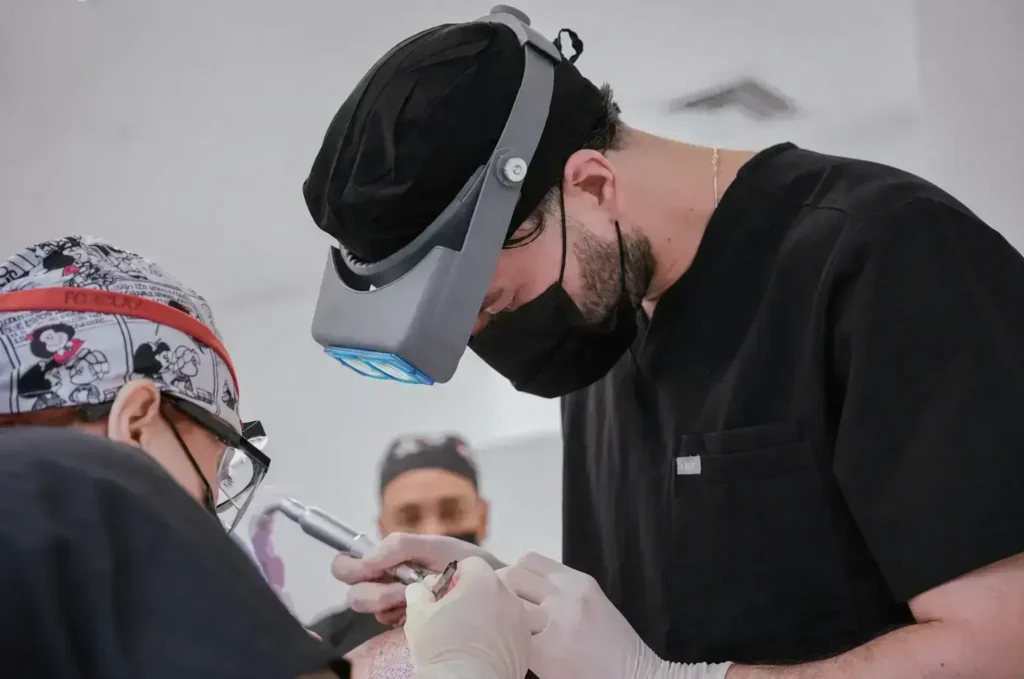
A hair transplant procedure involves more than moving follicles from one area of the scalp to another. Every stage requires coordination between the medical team, careful graft handling, and a surgical plan designed around the patient’s hair characteristics.
The Role of the Hair Transplant Medical Team
At Dharma Hair, the physician leads the procedure, supervises the clinical team, and makes the medical decisions that guide each stage of surgery.
The process involves trained professionals responsible for preparing the patient, assisting with follicular extraction, handling grafts, and supporting implantation.
Before surgery, we follow clinical protocols that include reviewing the treatment plan, preparing the surgical area, checking the necessary equipment, and maintaining sterile conditions.
Technology can assist with precision, but medical judgment and teamwork remain essential throughout the procedure.
Manual FUE and ARTAS iX Robotic-Assisted FUE
Both manual FUE and ARTAS iX robotic-assisted FUE use the Follicular Unit Extraction technique, which removes individual follicular units from the donor area without requiring a linear strip incision.
The difference lies in how extraction is performed.
| Manual FUE | ARTAS iX Robotic-Assisted FUE |
|---|---|
| The medical professional identifies and extracts follicular units using specialized instruments. | The robotic system uses digital imaging to identify and assist with follicular unit extraction. |
| Extraction angle, depth, and distribution depend on the operator's technique and assessment. | The system analyzes visible hair characteristics, including angle, position, and orientation, to assist with extraction. |
| Allows the medical team to adapt the procedure manually according to the patient's anatomy. | Uses computer-assisted tracking and adjustable parameters under medical supervision. |
At Dharma Hair, we offer both approaches. The choice between manual FUE and ARTAS iX depends on your donor area, hair characteristics, and surgical plan, rather than assuming one method is always better.
Follicular Extraction, Graft Handling, and Implantation
Once the technique and surgical plan are established, the procedure follows a coordinated sequence:
Step 1. Follicular extraction
We extract selected follicular units from the donor area, following the planned distribution to avoid excessive harvesting.
Step 2. Graft inspection and preservation
Extracted grafts are examined, organized, and maintained under appropriate conditions to minimize tissue damage and unnecessary time outside the body.
Step 3. Recipient area preparation
The implantation area is prepared according to the planned hairline, density, and natural direction of hair growth.
Step 4. Follicular implantation
The grafts are carefully placed in the recipient area, respecting their distribution, orientation, and the overall surgical design.
Each step matters. Even with advanced robotic assistance, graft survival and the final appearance depend on multiple medical and biological factors, not technology alone.
International Patients
Planning a Hair Transplant in Medellín?
Your journey can begin before you travel. Connect with our team for a personalized assessment and explore your hair restoration options at Dharma Hair.
How Is Recovery Organized if You Travel to Medellín for Your Hair Transplant?
If you live abroad, the trip itself (virtual assessment, quote, travel dates and the in-person evaluation in Medellín) is explained step by step in our guide to planning a hair transplant in Colombia from abroad. This section covers what comes after surgery: the first days of recovery in Medellín and how follow-up continues once you are back home.
After Surgery: Recovery, Follow-Up, and Returning Home
Your treatment doesn't end when the last graft is implanted. The first days are important for protecting the recipient area and monitoring healing.
We provide postoperative instructions covering each stage of recovery. Select a stage below to learn what to expect.
01 First Few Days
02 Early Recovery
03 Before Returning Home
04 Following Months
Temporary shedding of transplanted hairs can occur during the first few weeks. New growth generally becomes noticeable over the following months, while the final appearance takes longer to develop.
The recommended length of your stay in Medellín depends on your procedure and recovery needs. We discuss this during treatment planning so you can organize your trip appropriately.
If you're considering a hair transplant in Medellín, Colombia, we invite you to schedule a consultation with our team and discover which treatment options may be right for you.
Frequently Asked Questions About Hair Transplant Clinics
1. What should I look for in a hair transplant clinic?
A specialized hair transplant clinic should offer a thorough medical evaluation, experienced professionals, personalized surgical planning, and postoperative care. Ask who will perform and supervise the procedure, how your donor area will be protected, and what results are realistic for your case. The clinic should explain its techniques, potential risks, and follow-up process before you commit to surgery.
For a full list of what to compare between clinics, read our guide on how to choose the right hair transplant clinic in Colombia. If you are still deciding whether Medellín is the right destination, start with our Medellín hair transplant guide.
2. How do I know if a hair transplant clinic is qualified?
Start by verifying the medical credentials of the physician responsible for your procedure and the clinic’s authorization to provide surgical services. Ask about the team’s experience with hair restoration, infection prevention protocols, and how complications are managed. In Colombia, you can check healthcare professionals through ReTHUS and verify healthcare providers and authorized services through REPS.
3. Can a hair transplant clinic determine how many grafts I need?
Yes. During your evaluation, we estimate the number of follicular grafts needed based on the size of the treatment area, your desired coverage, and the available donor hair. However, the final number must also consider your hair characteristics and the possibility of future hair loss. A higher graft count doesn’t automatically mean a better result.
4. Is ARTAS iX robotic hair transplantation better than manual FUE?
Not necessarily. Both manual FUE and ARTAS iX robotic-assisted FUE can produce natural-looking results when appropriately planned and performed. ARTAS iX uses digital imaging and robotic assistance to support follicular selection and extraction, while manual FUE relies on the operator’s direct control. At Dharma Hair, we evaluate your individual characteristics before recommending either approach.
5. How much does a hair transplant cost in Medellín, Colombia?
The cost of a hair transplant in Medellín, Colombia depends on the number of grafts, the complexity of your case, and the technique selected. At Dharma Hair, robotic hair transplantation with ARTAS iX has a reference starting price of approximately USD 3,000, subject to individual evaluation and current pricing. We provide a personalized estimate after reviewing your needs and treatment options.
6. Can I have a hair transplant consultation before traveling to Colombia?
Yes. At Dharma Hair, international patients can begin with a virtual consultation. We may request photographs of your scalp, information about your hair loss history, and relevant medical details. This allows us to discuss potential treatment options and provide preliminary guidance before your trip. Your surgical plan is confirmed following an in-person examination.
7. How long should I stay in Medellín after a hair transplant?
The recommended stay depends on your procedure, recovery, and scheduled postoperative evaluations. You’ll need time for the initial medical review and instructions on washing and protecting the transplanted area. We recommend discussing your travel dates with our team before booking flights so your itinerary accommodates the necessary care.
8. Will my hair transplant results look natural?
A natural-looking result depends on several factors, including hairline design, follicular unit selection, implantation angles, donor hair characteristics, and healing. At Dharma Hair, we plan the hairline according to your facial proportions and existing hair pattern. Results vary between patients, and no clinic can guarantee a specific density or final appearance.
9. What happens if I experience complications after returning home?
Before traveling home, you should receive clear postoperative instructions and know how to contact your treating team. At Dharma Hair, we provide guidance for continued recovery and follow-up communication as arranged. If you experience symptoms such as increasing pain, spreading redness, fever, or unusual discharge, seek prompt in-person medical attention rather than relying solely on a virtual consultation.
10. How long does it take to see the results of a hair transplant?
Hair transplant results develop gradually. Temporary shedding of transplanted hairs is common during the first few weeks. New growth often begins around three to four months, with more noticeable improvements between six and nine months. Results are commonly assessed around 12 to 18 months, depending on the treated area and individual healing. During your consultation, we’ll explain what timeline may be realistic for your case.
References
- International Society of Hair Restoration Surgery (ISHRS).
- International Society of Hair Restoration Surgery (ISHRS)
- American Academy of Dermatology (AAD)
- American Society of Plastic Surgeons (ASPS). Hair Transplantation and Restoration: Recovery
- American Society of Plastic Surgeons (ASPS). Hair Transplant Risks and Safety.
Dharma Hair — Specialized Hair Restoration
Torre Médica Oviedo, Cll 6 Sur #43A-227, Office 701, Medellín, Colombia
Phone/WhatsApp: +57 321 226 5964 · Email: clinicabedharma@gmail.com
Medical Director: Dr. David Delgado — Plastic Surgeon, SCCP Member