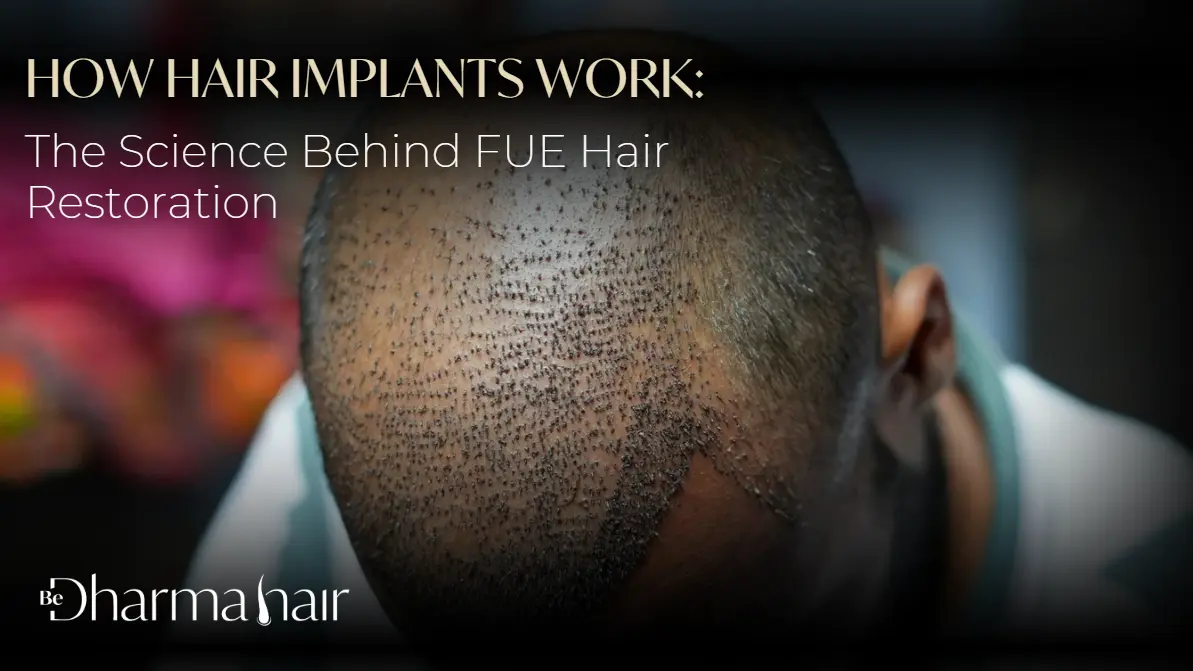
How Hair Implants Work: The Science Behind FUE Hair Restoration

How Hair Implants Work- Dharma Hair- Medellín
Dr. David Delgado — Cirujano Plástico, Director Médico de Dharma Hair

Dr. David Delgado

Cirujano Plástico · Director Médico, Dharma Hair

Miembro de la Sociedad Colombiana de Cirugía Plástica (SCCP) · +10 años de experiencia

Publicado: 24 de abril de 2026 · Actualizado: 24 de abril de 2026

How hair implants work is one of the most important questions to ask before committing to a hair transplant. After all, this is not only a cosmetic decision; it is a biological process in which healthy hair follicles are carefully moved, protected, and implanted so they can continue growing in a new area of the scalp.

At Dharma Hair in Medellín, Colombia, we believe that understanding what happens before, during, and after a FUE hair transplant helps patients feel more confident, especially those traveling from abroad. In this blog, we explain the medical logic behind hair restoration, how implanted follicles behave, what the step-by-step process involves, and what international patients can expect when choosing Medellín for their procedure.

Ready to understand your hair restoration options? Schedule your FUE consultation with Dharma Hair.

How do Hair Implants Work?

A hair transplant works by relocating healthy follicles from a stable donor area, usually the back or sides of the scalp, to areas affected by thinning or baldness. In the FUE technique, each follicular unit is extracted individually and then implanted with careful attention to angle, direction, and density, so the result can blend naturally with the patient’s existing hair.

In other words, the procedure does not create new follicles. Instead, it redistributes strong living follicles to restore coverage where hair has been lost.

The Role of Healthy Hair Follicles

Hair follicles are living structures beneath the skin. Each one contains the biological machinery needed to produce hair, including cells responsible for growth and interaction with the surrounding tissue.

For this reason, the success of a hair implant procedure depends on how carefully these follicles are extracted, preserved, and implanted. When handled properly, the grafts can survive in the new area and begin producing hair again as part of the natural growth cycle.

Why the donor area matters in Hair Transplantation

Before surgery, the donor area must be evaluated in detail. At Dharma Hair, we assess factors such as density, follicle quality, scalp condition, and the long-term stability of the patient’s hair pattern.

This step is essential because the donor area is limited. A responsible FUE hair transplant procedure should not only focus on today’s result, but also on how the scalp may change over time. Good planning helps protect the donor area and supports a natural, balanced outcome.

How Implanted Hair Follicles adapt to the recipient area

Once implanted, the follicles need time to reconnect with the surrounding tissue. During the early healing phase, the scalp begins to support the grafts with oxygen and nutrients through local blood supply.

After this adaptation period, the implanted follicles gradually enter their normal biological rhythm. This is why transplanted hair growth is progressive: the follicle must heal, stabilize, and restart its growth cycle before visible density begins to improve.

How Hair Implants Work- Dharma Hair- Medellín

The science behind Hair Transplantation

The biological principle behind a hair transplant is known as donor dominance. In simple terms, this means that follicles taken from a stable donor area tend to preserve many of their original characteristics after being moved to a new location. As Bernstein Medical explains, in hereditary baldness, transplanted hair “maintains the characteristics of where it was taken from,” which is one of the reasons hair restorations can produce long-lasting results when properly planned.

In a FUE hair transplant, the goal is not only to move hair from one area to another. The real objective is to protect the biological viability of each follicular unit so it can survive, reconnect with the surrounding tissue, and eventually produce new hair in the recipient area.

How Transplanted Hair grows naturally

Once a follicular unit is implanted, the scalp begins a healing process around it. During the first days, the graft depends on the surrounding tissue for oxygen and nutrients. According to StatPearls, the follicle receives vascular support from small vessels that “deliver oxygen and nutrients,” which is essential for normal hair growth and follicular function.

This process can be understood in three key stages:

1. Placement

The follicle is inserted into the recipient area with attention to depth, angle, and direction. These details influence how natural the future hair will look.

2. Adaptation

The surrounding tissue begins to heal around the graft. At this point, the follicle is not yet producing visible new hair, but it is stabilizing biologically.

3. Growth activation

Over time, the follicle re-enters its normal hair cycle and begins producing new hair. This growth is gradual, which is why results appear progressively rather than immediately.

Why Implanted Hair can be permanent

Implanted hair follicles can be long-lasting because they are usually taken from areas that are genetically more resistant to the miniaturization process associated with androgenetic alopecia. In practical terms, this means the follicle often keeps the behavior of its donor area even after implantation.

However, permanence depends on several factors:

For this reason, at Dharma Hair, we approach hair restoration as a medical plan, not simply as a cosmetic procedure. A natural result requires understanding both the current hair loss pattern and how it may evolve over time.

What happens during the hair growth cycle after surgery

After surgery, transplanted hair does not grow in a straight line from day one. Instead, it follows the natural hair cycle. StatPearls describes this cycle in three phases: anagen, the active growth phase; catagen, the transition phase; and telogen, the resting phase.

Initial healing phase

During the first days, the scalp may show redness, small scabs, and mild sensitivity. This is part of the normal recovery process as the tissue closes around the grafts.

Temporary shedding phase

In the following weeks, some transplanted hairs may fall out. This can be concerning for patients, but it is usually expected. The follicle remains beneath the skin while the visible hair shaft sheds.

Resting phase

After shedding, the follicle may enter a quiet period. During this stage, there may be little visible change, even though the biological process is continuing under the skin.

New growth phase

Gradually, the follicle begins producing new hair. The first hairs may appear thinner at the beginning, but they usually gain strength, texture, and density over the following months.

This is why understanding how transplanted hair grows is so important: the procedure starts in the operating room, but the result depends on a progressive biological process that continues long after the patient leaves the clinic.

Discover if you are a good candidate for a hair transplant in Medellín. Book your personalized evaluation today.

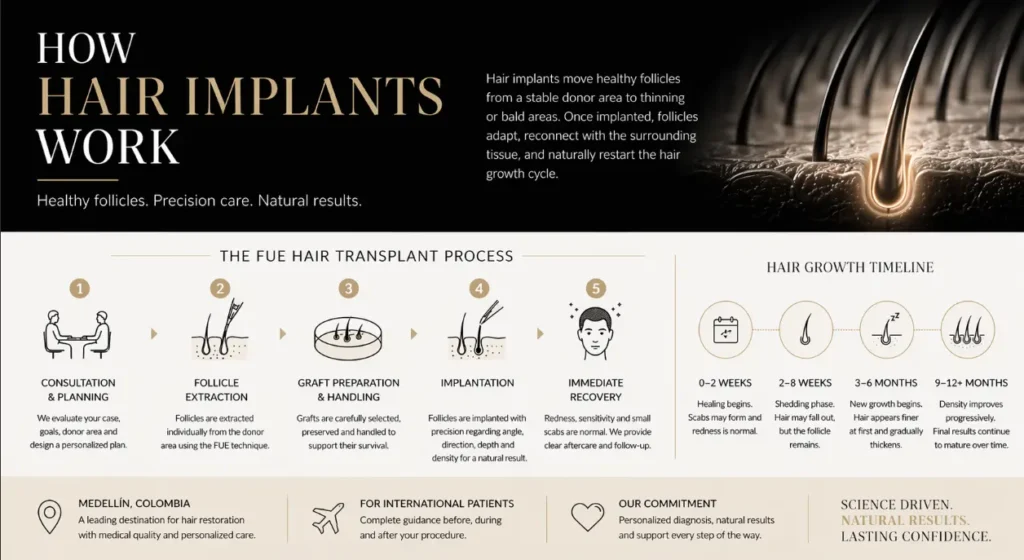
FUE Hair Transplant procedure step by step

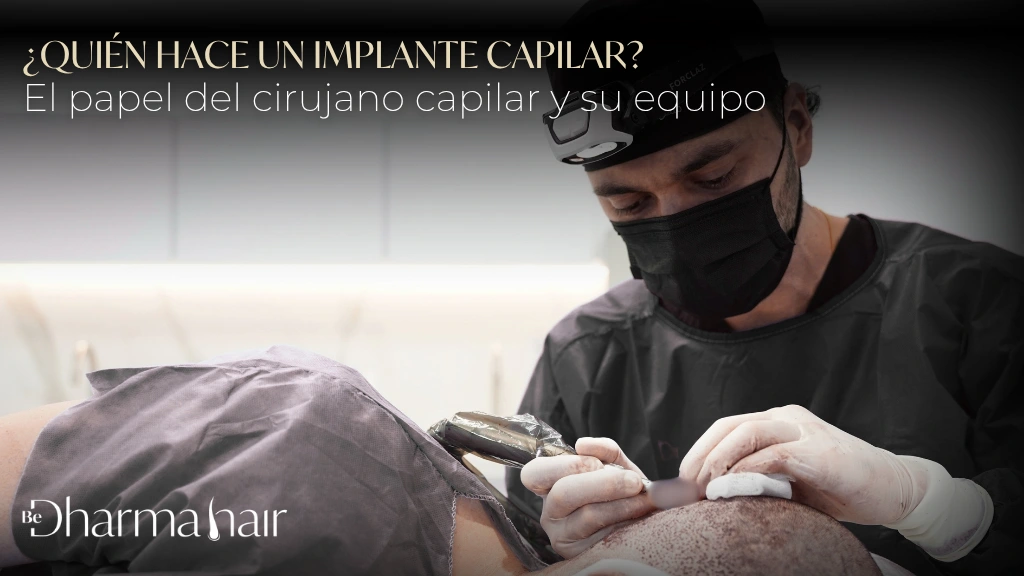
At Dharma Hair, the FUE hair transplant procedure follows a precise medical sequence designed to protect the follicles, create a natural design, and support long-term growth. Each stage matters because the result depends not only on how many grafts are implanted, but also on how carefully they are planned, extracted, handled, and placed.

How Hair Implants Work- Dharma Hair- Medellín

Initial consultation and personalized planning

The process begins with a detailed medical evaluation. During this stage, we analyze the patient’s hair loss pattern, donor area, scalp condition, hair type, expectations, and overall medical feasibility.
This consultation also includes hairline design, which is one of the most important aesthetic decisions in the procedure. The goal is not to create an artificial “perfect” line, but a natural frame that fits the patient’s age, facial structure, density, and long-term hair loss pattern.

How Hair Implants Work- Dharma Hair- Medellín

Hair follicle extraction from the donor area

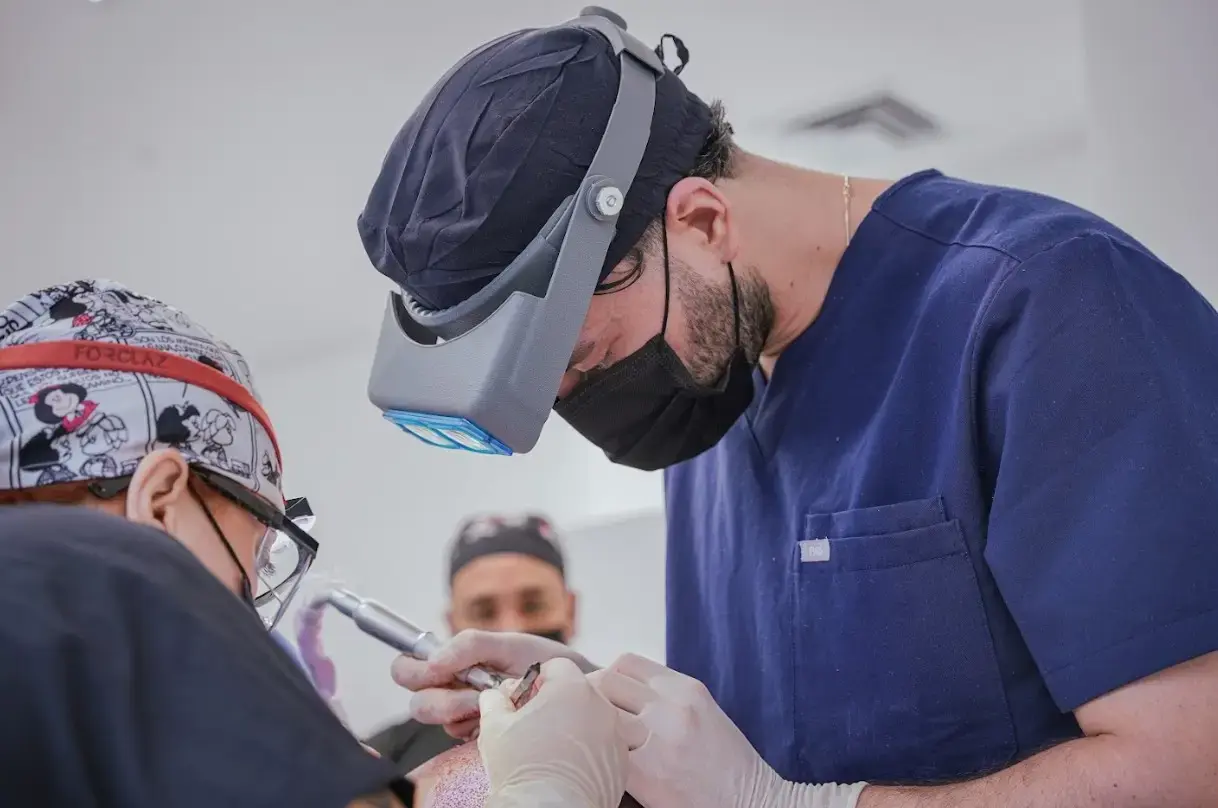
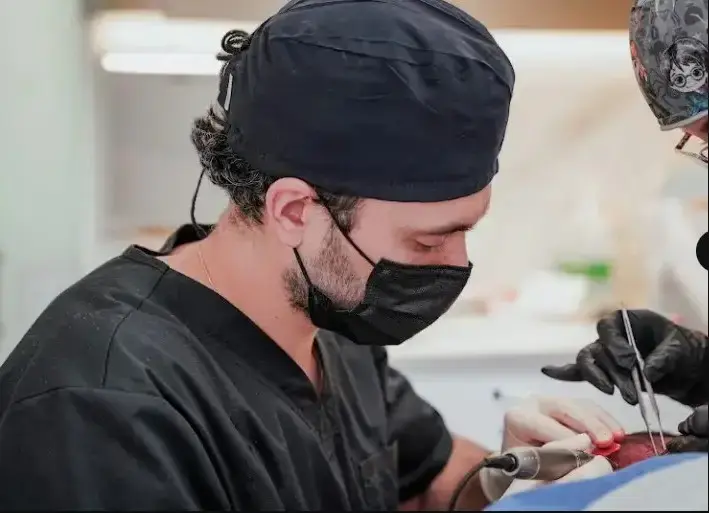
In the FUE technique, follicular units are extracted individually from the donor area, usually located at the back or sides of the scalp. This allows the medical team to select healthy follicles while preserving the donor zone as much as possible.
Because the donor area is limited, extraction must be strategic. A responsible hair transplant procedure protects both the immediate result and the patient’s future options.

How Hair Implants Work- Dharma Hair- Medellín

Graft preparation and medical handling

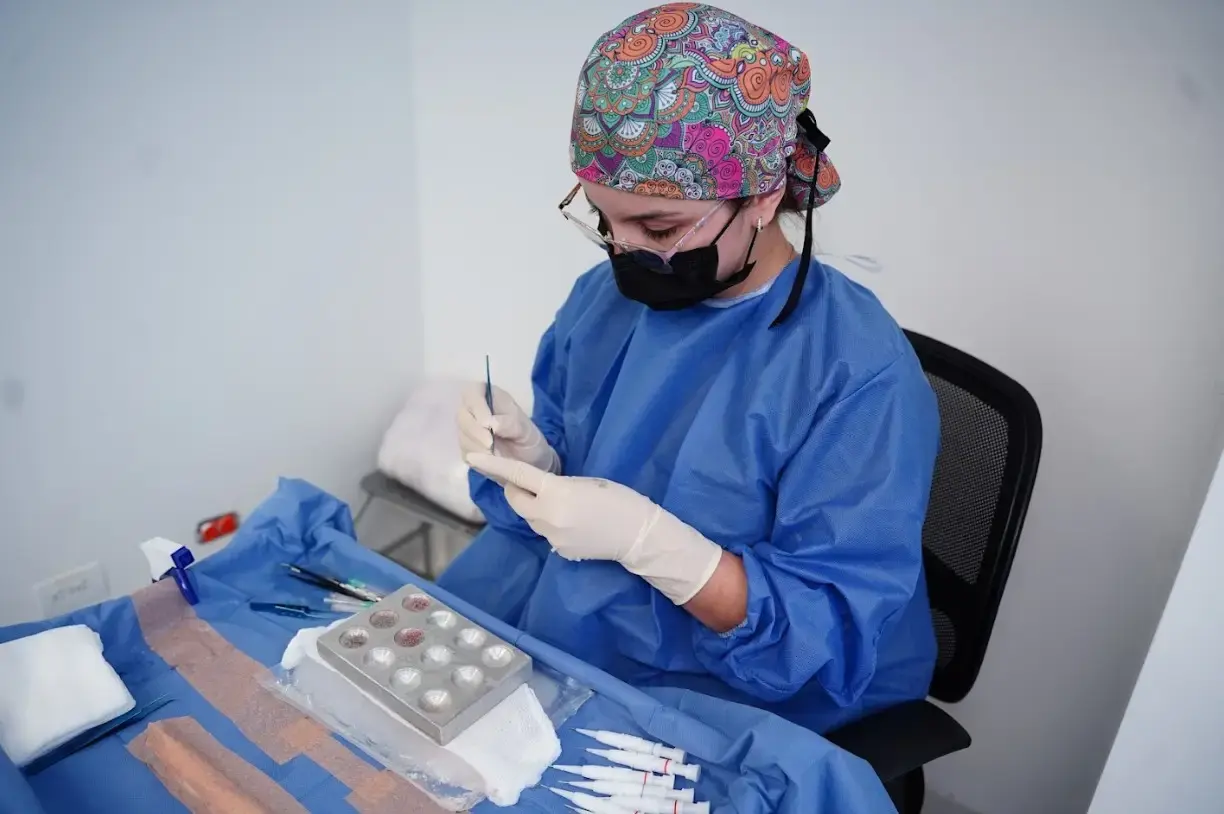
After extraction, the grafts are carefully reviewed, organized, and preserved under controlled conditions. This step is essential because follicles are living tissue, and their survival depends on proper handling.
At this point, the team evaluates the grafts according to their characteristics, such as the number of hairs per follicular unit, quality, and suitability for different areas of the scalp.

How Hair Implants Work- Dharma Hair- Medellín

Hair follicle implantation in the recipient area

Once the recipient area is prepared, the follicles are implanted according to the surgical plan. Direction, angle, depth, and density are carefully considered to help the new hair grow in a way that blends with the patient’s natural pattern.
This is where medical technique and aesthetic judgment come together. A natural result depends on placing the right grafts in the right areas, not simply increasing density without planning.

Immediate recovery after the procedure

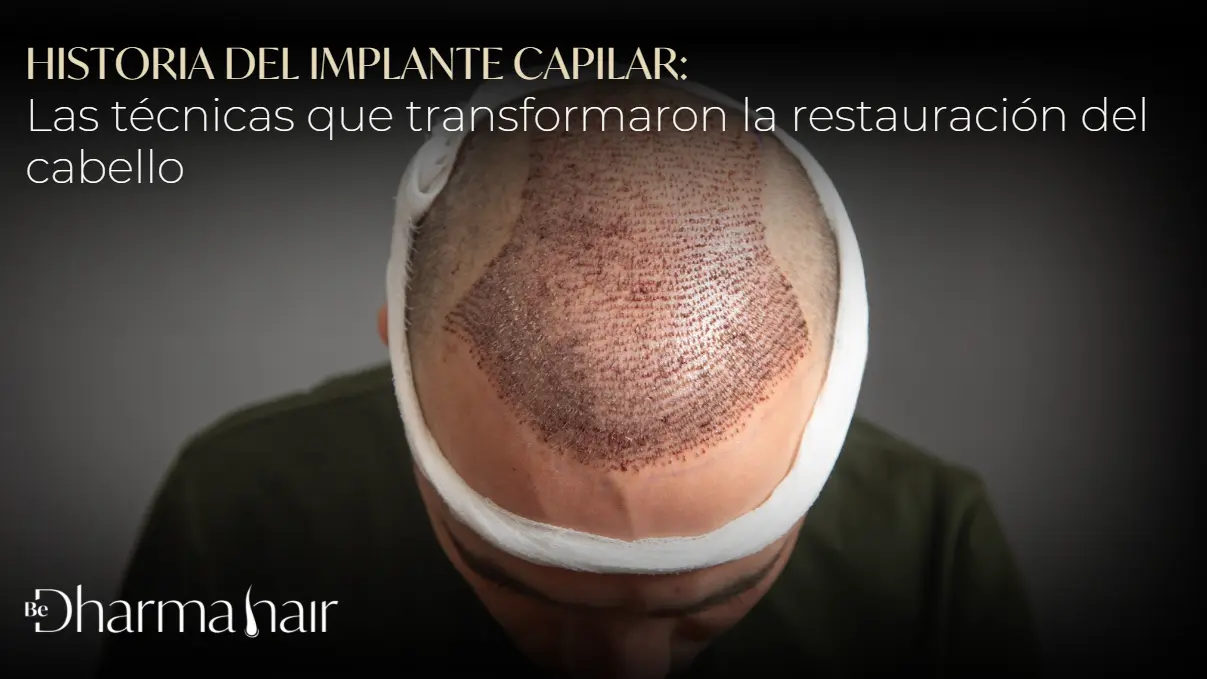
After the procedure, patients may experience redness, mild swelling, sensitivity, and small scabs around the implanted follicles. These early changes are expected and usually improve progressively with proper care.

Before leaving Dharma Hair, each patient receives clear post-procedure instructions, including how to wash the scalp, what to avoid, how to protect the grafts, and when to attend follow-up appointments.

● Free evaluation

Have questions about your case?

Talk to our medical team. A personalized evaluation is the only way to know if a hair implant is right for you.

Message us on WhatsApp

Hair Transplant growth timeline: What to expect

The hair transplant growth timeline is progressive. Patients should not expect full density immediately after surgery, because implanted follicles need time to heal, stabilize, and restart their natural growth cycle.

The First weeks after Hair Implant Surgery

During the first days, the scalp begins to heal around the implanted grafts. Small scabs may form, redness can be visible, and the area may feel sensitive.
In this stage, careful aftercare is essential. Patients must avoid friction, direct trauma, excessive sun exposure, and anything that could interfere with graft stabilization.

Why Transplanted Hair may fall out before growing again

One of the most common concerns after surgery is temporary shedding. In many cases, the visible hair shaft falls out during the first weeks, even though the follicle remains beneath the skin.
This does not mean the procedure has failed. It is a normal part of the biological response after implantation. The follicle enters a resting phase before producing new hair again.

When patients start seeing Hair Transplant results

New growth usually appears gradually over the following months. At first, the hair may look fine or uneven, but it typically becomes stronger and more visible with time.
Density improves progressively, and the result is usually evaluated after several months, once the follicles have had enough time to mature. This is why patience is essential: natural hair transplant results develop through biology, not instantly.

Considering FUE hair restoration? Let our team guide you through the process with clarity and confidence.

Hair Transplant in Medellín, Colombia for International Patients

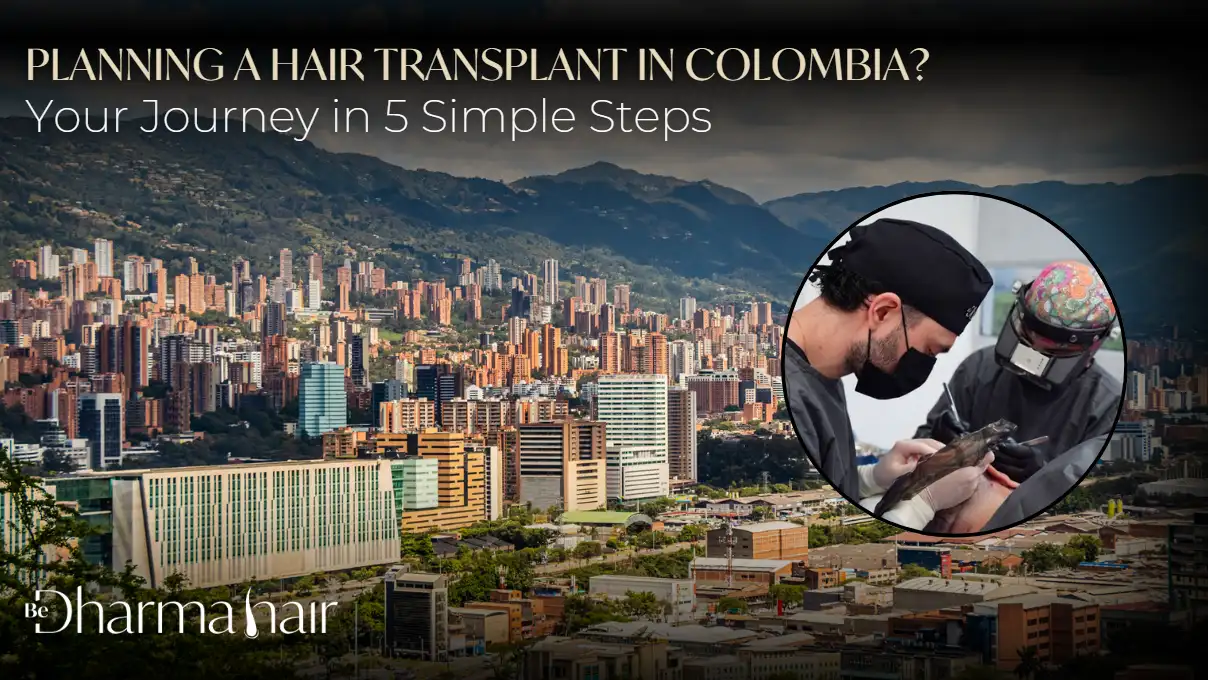
For many foreign patients, choosing a hair transplant in Medellín, Colombia is not only about the procedure itself. It is also about receiving medical care in a destination that offers accessibility, comfort, and a personalized patient experience.

At Dharma Hair, we understand that traveling for a medical procedure requires clarity, coordination, and trust from the first contact.

Why Medellín is becoming a destination for Hair Restoration

Medellín has become increasingly attractive for patients seeking hair restoration because it combines medical quality, modern clinical environments, international connectivity, and a welcoming city experience.

For international patients, this can make the process feel more approachable: they can receive specialized care while recovering in a city known for its hospitality and accessibility.

What foreign patients should know before traveling

Before traveling, international patients should have a remote or in-person consultation to evaluate their case, confirm whether they are good candidates, and understand what can realistically be achieved.

They should also plan enough time for the procedure, immediate recovery, and follow-up before returning home. Clear expectations are essential, especially regarding healing, visible growth, and the months required to see mature results.

Medical tourism and Hair Transplant care in Colombia

A successful experience requires more than surgery. International patients need guidance before, during, and after their trip.

At Dharma Hair, we support patients with appointment coordination, pre-procedure orientation, post-care instructions, and follow-up guidance. This helps make the hair implant procedure more organized, predictable, and reassuring for those traveling to Medellín for their transformation.

Why Trust Dharma Hair for your Hair Restoration procedure?

At Dharma Hair, every hair restoration procedure begins with a personalized diagnosis. We evaluate each patient’s hair loss pattern, donor area, scalp condition, expectations, and medical feasibility to design a realistic plan, not a generic treatment. Our approach is based on honest guidance, careful planning, and a clear understanding of what can be achieved naturally with the FUE hair transplant procedure.

Located in the Oviedo Medical Tower in Medellín, Dharma Hair offers close, human support for both local and international patients. From the first consultation to post-procedure follow-up, our team guides each patient through the process with clear communication, appointment coordination, and care focused on natural hair transplant results, including density, direction, and design that fit each person’s features.

Frequently Asked Questions About How Hair Implants Work

How do hair implants work biologically?

Hair implants work by moving healthy follicular units from a stable donor area to areas affected by thinning or baldness. Once implanted, these follicles need time to adapt to their new location, reconnect with surrounding tissue, receive blood supply, and restart their natural growth cycle. This is why results appear gradually rather than immediately.

In many cases, implanted hair follicles can be long-lasting because they are usually taken from areas that are more resistant to genetic hair loss. However, permanence also depends on donor quality, surgical planning, graft handling, aftercare, and the patient’s future hair loss progression. A responsible plan must consider both the current result and how the scalp may change over time.

The growth process takes several months. During the first weeks, the scalp heals and the implanted hairs may shed. After a resting phase, new growth usually begins gradually, often appearing fine at first and becoming stronger with time. Final hair transplant results are usually assessed once the follicles have matured and density has improved.

Temporary shedding is a normal part of the biological response after surgery. The visible hair shaft may fall out, but the follicle can remain beneath the skin. This stage can worry patients, but it does not necessarily mean the graft was lost. In many cases, the follicle enters a resting phase before producing new hair again.

A FUE hair transplant procedure is performed with local anesthesia, which helps keep the patient comfortable during extraction and implantation. After the procedure, some sensitivity, tightness, redness, or mild discomfort may appear, especially during the first days. These symptoms are usually temporary and managed with the post-care instructions provided by the medical team.

A successful hair transplant depends on several factors working together: accurate diagnosis, a healthy donor area, careful extraction, proper graft preservation, precise implantation, and disciplined aftercare. Beyond density, the result must respect natural hair direction, angle, facial proportions, and long-term planning. The goal is not only more hair, but hair that looks natural.

The donor area is the region where healthy follicles are extracted, most commonly the back or sides of the scalp. This area is carefully evaluated before surgery because it determines how many grafts may be safely used and how the donor zone will look afterward. Since the donor area is limited, responsible planning is essential.

Many patients can return to light daily activities within a few days, depending on their recovery and medical instructions. However, during the early healing phase, it is important to avoid intense exercise, direct sun exposure, swimming, friction, or anything that could disturb the implanted grafts. The medical team will indicate when each activity can be resumed safely.

A natural result depends on design, technique, and medical judgment. At Dharma Hair, the FUE hair transplant procedure considers the patient’s hairline, facial structure, density, direction, and existing hair pattern. The goal is to create a result that does not look artificial or overly dense in one area, but balanced, realistic, and consistent with the patient’s features.

Yes. International patients can travel for a hair transplant in Medellín, Colombia after a proper medical evaluation. At Dharma Hair, located in the Oviedo Medical Tower, patients receive guidance before, during, and after the procedure, including appointment coordination, preparation instructions, recovery guidance, and follow-up support to make the experience clearer and more organized.

Dharma Hair — Restauración Capilar Especializada

Torre Médica Oviedo, Cll 6 Sur #43A-227, Consultorio 701, Medellín, Colombia

Teléfono/WhatsApp: +57 321 226 5964 · Email: clinicabedharma@gmail.com

Director Médico: Dr. David Delgado — Cirujano Plástico, Miembro SCCP

Aviso médico: La información contenida en esta página tiene fines educativos e informativos. No reemplaza la valoración, diagnóstico ni recomendación de un profesional médico. Los resultados de los procedimientos capilares varían según las características individuales de cada paciente. Consulte directamente con nuestro equipo médico para una evaluación personalizada.
Implante Capilar Medellín

Contáctanos para tu transformación capilar